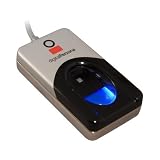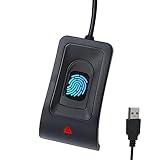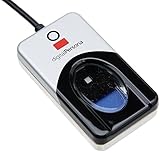
Typing a password twenty times a day gets old fast. If your desktop lacks the built-in sensor your laptop and phone already have, biometric sign-in on Windows stays out of reach. The Verifi P2000 is a machined aluminum USB scanner built by Zvetco Biometrics that fills that gap for tower PCs and monitor-based setups.
This Verifi P2000 fingerprint reader review looks at a device that trades plastic and gimmicks for a 3.6-ounce metal housing, Windows Hello certification, and passkey support. That puts it in a different class than the $15 dongles crowding the same search results.
High-Definition Fingerprint Imaging Based on Superior 3D Touch Capacitance Technology
PASSKEY compatable. Start enjoying PASSKEY login to all available websites
Windows Hello Certified offers seamless operation with Windows Hello and Windows Hello for Business
At roughly 2.75 by 1.75 inches with a 0.75-inch depth, it sits on a desk without sliding around. The ambidextrous swipe design works whether you scan with your left or right hand.
It ships with installation hardware and a printed manual, though the setup process asks a bit more of you than plugging in a mouse.
Verifi P2000 Desktop USB Fingerprint Reader Overview
Zvetco builds this scanner as a desk-anchored device, so the weight and polished aluminum shell serve a purpose. At 3.6 ounces, it stays put when you swipe, which cheap plastic readers rarely manage.
Specification
Detail
Model
P2000 (P2000-BLK-VER)
Manufacturer
Zvetco Biometrics
Dimensions
2.75″ L x 1.75″ W x 0.75″ D
Weight
3.6 oz
Material
Polished aluminum
Color
Black/Silver
Connection
USB
Orientation
Ambidextrous
In the box
Reader, installation hardware, manual
It ranks among the better-selling biometric devices in the security and surveillance category, and it holds a respectable customer rating across several hundred reviews. Placement matters more than you’d expect. Keeping it forward of your keyboard makes the swipe motion natural.
High-Definition 3D Capacitive Fingerprint Scanning
The sensor reads the sub-surface structure of your finger using 3D touch capacitance, which is why it handles dry skin and light wear better than optical readers that photograph the surface. Capacitive sensing measures the ridge-and-valley pattern electrically.
In practice, that translates to fewer rejected swipes. Users who moved over from older optical or swipe-style scanners consistently note the improvement in first-try recognition.
Enrollment quality still drives results. Register each finger several times at slightly different angles, and register a backup finger on your other hand. Swipe at a steady, moderate pace. Dragging too slowly is the most common cause of a failed read on any swipe-style fingerprint reader.
Windows Hello and Passkey Sign-In
Windows Hello certification is the headline capability here, covering both consumer Windows Hello and Windows Hello for Business in managed environments. Once enrolled through Settings, the reader unlocks your account, authorizes UAC prompts, and confirms Microsoft account actions.
Passkey support extends that to the web. Sites that accept FIDO passkeys let you sign in with a swipe, with no password typed or stored.
Reader experiences on Windows 11 skew positive, with several owners describing straightforward Settings-based enrollment on Windows 11 Pro machines. A minority ran into detection problems, which usually trace back to driver installation order.
Password Manager and Microsoft Service Compatibility
Leading password management software works with this reader, generally by hooking into the Windows Hello authentication layer rather than talking to the hardware directly. If your manager offers an “unlock with Windows Hello” toggle, the P2000 satisfies it.
Microsoft 365 and Office 365 sign-in flows behave the same way. Approving an Outlook or SharePoint prompt becomes a swipe instead of a re-typed password.
The practical requirement is that your application supports Windows Hello. Software built around proprietary fingerprint SDKs from other vendors won’t recognize this scanner, so verify compatibility before you buy if you rely on a specific enterprise tool.
Installation, Drivers, and Everyday Desktop Use
Plan on downloading drivers from Zvetco rather than expecting plug-and-play. Multiple owners describe the same sequence: install the driver package first, reboot, then plug in the reader and enroll fingerprints through Windows settings.
Skipping that order is where most failed installs originate. Windows sometimes claims a generic driver, and the device never appears under sign-in options.
Day to day, the aluminum body stays cool and shrugs off desk abuse. The USB cable length dictates placement, so check that it reaches comfortably from your tower to your desk surface.
Compared with a compact USB fingerprint scanner that plugs directly into a port, this one is meant to live within arm’s reach.
Pros and Cons
Pros
Solid machined aluminum housing that resists sliding and wear
3D capacitive sensing with strong first-swipe accuracy
Windows Hello and Windows Hello for Business certified
Passkey-ready for FIDO-enabled websites
Ambidextrous design suits left- and right-handed users
Works with Microsoft 365 and Windows Hello-aware password managers
Cons
Requires manual driver installation; not plug-and-play
Minimal packaging, with documentation that leaves some setup steps thin
Reliability complaints from a subset of buyers, including early failures
Swipe-style motion takes a short adjustment period
Older design with limited support outside the Windows ecosystem
What Customer Reviews Reveal
Feedback splits along a clear line: owners who got it installed correctly report years of dependable service, while a smaller group hit setup failures or hardware that quit early. That pattern explains the mixed but solidly above-average rating.
Positive accounts are specific. A longtime IT professional who lost use of one hand credits the reader with restoring practical access to his machines. Another user reports never having a print rejected and finding the swipe style easier than the older press-and-hold windows.
Complaints cluster around two issues. Several buyers mention sparse packaging and drivers that had to be hunted down, and at least one reported failure within a week. A Windows 11 buyer never got the device recognized at all.
Longevity comments favor the hardware itself. Owners a year or more in describe the unit as physically robust, with setup friction as the main hurdle to clear.
Conclusion
The P2000 earns its place on a desk where fingerprint sign-in needs to work every time and the hardware needs to survive daily contact. Its 3D capacitive sensor and Windows Hello certification cover the two things most desktop buyers want.
Budget twenty minutes for driver installation and enrollment, and register at least two fingers across both hands. If your workflow already runs on Windows and you want passkey and Microsoft 365 sign-in without a password, this reader handles it.
Yes, the P2000 operates on Windows 11, and owners report successful setup on Windows 11 Pro laptops and desktops. Install the current driver package from Zvetco before connecting the device, since Windows may otherwise assign a generic driver that prevents recognition.
Can the Verifi P2000 be used for Windows Hello sign-in?
Yes, the reader carries Windows Hello certification and supports both standard Windows Hello and Windows Hello for Business. After enrolling a fingerprint in Settings, it unlocks your account, clears UAC prompts, and confirms Microsoft account actions.
Does the Verifi P2000 support passkeys?
The P2000 is passkey compatible, letting you authenticate on FIDO-enabled websites with a fingerprint swipe. Your browser and the site both need passkey support for the flow to appear as a sign-in option.
Is the Verifi P2000 compatible with password managers?
It works with leading password managers that offer Windows Hello unlock, since authentication passes through the Windows biometric layer. Managers relying on a competing vendor’s proprietary fingerprint SDK will not detect this hardware.
Do I need to install drivers for the Verifi P2000?
Yes, driver installation is required and should happen before you plug the reader in. Owners who connected the device first frequently had to uninstall, install the Zvetco package, reboot, and reconnect to get it working.
Is the Verifi P2000 a good USB fingerprint reader for a desktop PC?
For desktop use, it’s a strong choice, thanks to the weighted aluminum body that stays anchored during a swipe and the ambidextrous layout.
Buyers who want a plug-and-play experience with zero driver work should weigh that setup requirement first.
Our mission is to showcase the complex world of technology with comprehensive, accessible reviews. We bring you the freshest insights on everything from the most streamlined smartphones to the mightiest laptops, as well as the latest in smart home gadgets that simplify your daily routine and fitness wearables that monitor your well-being. Rest assured, we're here to guide you through the ever-evolving tech landscape.
Biometric authentication has become increasingly important in securing digital information, and USB fingerprint scanners are at the forefront of this technological advancement. These devices offer a straightforward way to add an extra layer of security to a variety of systems, from personal computers to advanced security environments in corporate and government sectors. The fundamental advantage of using a fingerprint scanner lies in its unique ability to leverage individual physical characteristics, making it exponentially more difficult for unauthorized access when compared to traditional password systems.
USB fingerprint scanners are compact, lightweight accessories designed to work with a computer’s USB port. They provide a quick and reliable method for verifying a user’s identity. These scanners capture high-resolution images of fingerprints, which are then used to match with pre-registered profiles. The portability and ease of use make them a popular choice for people seeking to enhance their security whether at home, in the office, or on-the-go.
When considering a USB fingerprint scanner, the accuracy of the sensor, compatibility with different operating systems, and the robustness of the accompanying software are paramount. The sensor’s resolution is crucial as it determines the scanner’s ability to capture detailed fingerprint patterns. Moreover, ensuring the scanner supports various platforms ensures seamless integration into the user’s workflow. Durability and the device’s ability to withstand physical wear and tear also factor into making an informed purchase.
Recognizing these critical considerations can guide consumers toward selecting a USB fingerprint scanner that balances security needs with convenience, performance, and reliability. With security concerns more prevalent than ever, these devices offer a tangible solution to a digital problem. Moving forward, the subsequent sections will delve into the specific features and benefits of USB fingerprint scanners, aiding potential buyers in determining the ideal device for their security requirements.
Top USB Fingerprint Scanners
In an era where digital security is paramount, USB fingerprint scanners have become a trusted tool for enhancing authentication processes. They offer a reliable means of protecting sensitive information by recognizing unique user biometrics. Ideal for both personal and professional use, these devices are compatible with various operating systems and boast a range of features designed to meet diverse security needs. The following selections represent some of the best USB fingerprint scanners available on the market, ensuring users can secure their digital life with confidence and ease.
Advanced Fingerprint Technology combines superior biometric performance and 360° readability with anti-spoofing protection, while exceeding industry standards for False Rejection Rate (3%) and False Acceptance Rate (0.002%)
Login on your Windows computer (for Windows 10 please download the latest driver from the Kensington website) using Microsoft's built-in Windows Hello login feature with just your fingerprint, no need to remember usernames and passwords; can be used with up to 10 different fingerprints so multiple users can login to the same computer
One-way conversion of biometric data into a proprietary template format prevents re-creation, reverse-engineering or use for unintended purposes, thereby protecting the user from identity theft; All biometric data is encrypted and digitally signed using strong 256-bit advanced encryption standard and transport layer security technologies to prevent eavesdropping, tampering or fraud
Consumers seeking to enhance their PC security with a reliable biometric device will find the Kensington VeriMark Fingerprint Key to be a solid choice.
Pros
Seamless login with a single touch
Enhanced security features including anti-spoofing
Broad password manager compatibility
Cons
Not compatible with Mac OS or Chrome OS
USB-C users will require an additional adapter
Occasional misreads necessitate multiple attempts
Integrating the Kensington VeriMark Fingerprint Key into a daily workflow proves to be a breeze. Installation is straightforward, and, soon enough, a simple press of a finger replaces the need for typing passwords. The one-touch access is not only a time-saver, but it adds a satisfying touch of modernity to accessing Windows accounts.
Security is paramount, and this fingerprint key doesn’t disappoint. It employs advanced encryption to ensure biometric data remains protected. The anti-spoofing technology is a welcome layer of security, adding peace of mind that only the rightful user gains access.
In an interconnected ecosystem of online tools, compatibility is crucial. The VeriMark Fingerprint Key works seamlessly with numerous password managers, streamlining the login process for various accounts and services. This synergy between devices and digital platforms underscores the device’s value in a tech-heavy environment.
The DigitalPersona Fingerprint Reader offers reliable performance and high-quality scans which makes it a solid choice for those in need of secure biometric authentication.
Pros
Captures high-quality fingerprint images
Resistant to electronic static discharge
Effective with a variety of finger conditions
Cons
No software included
Some users report inconsistent scan success
Potential compatibility issues
The DigitalPersona Fingerprint Reader’s optical technology ensures that fingerprint scans are detailed and clear. Users appreciate the robust build, noting that it feels durable and long-lasting. This device seems to be a reliable choice for anyone needing high-durability biometric equipment.
Customer feedback suggests that the absence of software necessitates a hunt for compatible applications, which can be an unexpected hassle. This hiccup means you’ll need to have some technical know-how or the patience to seek out the right software solutions.
Even with a sturdy design, there are occasional reports of the reader struggling to recognize fingerprints on the first attempt. This seems to happen infrequently, but it’s important to note for situations requiring consistent and speedy access. Overall, customers acknowledge its efficiency with both dry and moist fingers, improving its usability across different scenarios.
Instant Windows Hello Integration: Seamlessly access your Windows 10/11 PC with Microsoft-certified biometric authentication. Replace cumbersome passwords with one-touch fingerprint login through the native Windows Hello framework—no third-party software required.
Microsoft-Certified Security: Officially supports Windows Biometric Framework and Windows Hello. 0.001% False Acceptance Rate and 0.1% False Rejection Rate—bank-grade security for your desktop.
Plug & Play – No Drivers Needed: Zero driver installation for genuine Windows systems—automatic recognition upon connection (95%+ compatibility). For custom Windows builds, a free driver update is available via the included quick-start guide.
A decent option for Windows users seeking a straightforward fingerprint reader.
Pros
Simplifies logging in with Windows Hello.
Easy setup with automatic driver installation.
Supports multiple users with up to 10 fingerprints.
Cons
Inconsistent driver recognition.
Limited to Windows, no support for Linux or Mac.
Occasional fingerprint misreads.
For those who are accustomed to forgetting passwords, the JIANBOLAND USB Fingerprint Reader could be a worthwhile purchase. This device integrates well with Windows Hello, providing a more seamless and secure login process. The setup is generally hassle-free, as the drivers often install automatically without needing extra software.
We must highlight the convenience it offers with its capacity to store up to 10 different fingerprints. This feature is particularly useful for families or shared workspaces, allowing multiple users to access the same computer effortlessly. Additionally, the included 5ft extension cable makes it practical for desktop setups.
Despite its advantages, there are some issues that users should consider. Driver recognition can be inconsistent, sometimes requiring manual updates or restarts. Moreover, it doesn’t support Linux or Mac, limiting its versatility. Occasionally, the device may fail to recognize fingerprints, though it defaults to a PIN login, which can be frustrating.
This reader is for someone who uses a Windows system and prioritizes ease of login over extensive compatibility. It’s not perfect, but it could be a handy tool for the right user.
High-Definition Fingerprint Imaging Based on Superior 3D Touch Capacitance Technology
PASSKEY compatable. Start enjoying PASSKEY login to all available websites
Windows Hello Certified offers seamless operation with Windows Hello and Windows Hello for Business
The Verifi P2000 USB Fingerprint Reader is worth considering for those seeking a reliable and seamless biometric addition to their computer security toolkit.
Pros
Ensures quick access with high-definition fingerprint imaging.
Achieves enhanced security through advanced fingerprint matching.
Easily integrates with Windows Hello and various password managers.
Cons
May require careful setup and adherence to instructions.
Not universally compatible with all operating systems.
Some users report occasional misreads or inconsistency.
Integrating Verifi’s P2000 fingerprint scanner into my daily routine has bolstered security without sacrificing convenience. Its high-definition fingerprint imaging technology impressed me with its swift recognition times. As someone who juggles multiple passwords, the scanner’s compatibility with leading password management software was a significant relief.
One immediately notices the solid build. Crafted from aluminum with a black and silver finish, the P2000 exudes sophistication on any desk. The fact that it’s Windows Hello certified means no fiddling around with drivers; it practically sets itself up, ready for action right out of the gate.
Indeed, while the P2000 excels in performance, it’s important to follow the setup instructions meticulously to ensure optimal function, a step which may frustrate the less tech-savvy. Users who aren’t on compatible Windows platforms might feel left out, as the P2000 is very much a Windows-centric device. Finally, some resolve and patience might be needed on rare occasions when the device seems to stumble at fingerprint recognition.
In conclusion, the P2000 from Verifi Smart.Safe. is a commendable addition to any computer user’s suite of tools, offering a blend of security and efficiency. When set up correctly, it stands as a testament to modern biometric technology’s convenience and reliability.
Target Applications - Desktop PC security, Mobile PCs, Custom applications
Indoor, home and office use
Blue LED - soft, cool blue glow fits into any environment; doesn't compete in low light environments
Practical and reliable, the DigitalPersona U.are.U 4500 is ideal for users seeking a dependable biometric solution for their security needs.
Pros
Impeccable fingerprint recognition
Sleek design with small footprint
Durable with high-quality metal construction
Cons
No software included, setup may be challenging
Limited only to indoor environments
Not compatible with all Windows versions
Having just completed setup and testing of the DigitalPersona U.are.U 4500, it’s clear that this device offers excellent fingerprint recognition capabilities. The images captured by its optical scanner are crisp, making it rare to encounter misreads. The device’s sleek design meshes well with any workspace, and its compact size leaves plenty of room for other desk essentials.
Still fresh from the unboxing, one is quick to appreciate the ruggedness of this scanner. The metal casing gives a reassuring heft, which keeps the reader securely in place during use. It’s refreshing to see a device that prioritizes longevity and user experience in its design.
Setting up the DigitalPersona U.are.U 4500 can be a bit of a task, primarily due to the lack of software. While this speaks to its plug-and-play nature for supported systems, users might need to source drivers or compatible applications to begin using the device. This might be a roadblock for less tech-savvy individuals or those in fast-paced environments who need a quick deployment.
FIDO U2F certified, and FIDO2 WebAuthn compatible for expanded authentication options, including strong single-factor (passwordless), dual, multi-factor, and Tap-and-Go support across major browsers (for services leveraging the older FIDO U2F standard, instead of using biometric authentication, Tap-and-Go allows the user to simply place their finger on the VeriMark Desktop Fingerprint Key to enable a security token experience).
Windows Hello certified (includes Windows Hello for Business) for seamless integration. Also compatible with additional Microsoft services including Office365, Microsoft Entra ID, Outlook, and many more. Windows ARM-based computers are currently not supported. Please check back for future updates on compatibility
Encrypted end-to-end security with Match-in-Sensor Fingerprint Technology combines superior biometric performance and 360° readability with anti-spoofing technology. Exceeds industry standards for false rejection rate (FRR 2%) and false acceptance rate (FAR 0.001%).
This fingerprint reader offers solid performance and robust security features, making it a top choice for anyone looking to enhance desktop security.
Pros
High compatibility with Windows Hello and Microsoft services
Strong biometric performance and 360° readability
End-to-end encrypted security with anti-spoofing technology
Cons
Moisture can affect fingerprint recognition
Initial setup may take some time to configure
Occasionally unresponsive with computer sleep mode
This fingerprint reader is a reliable option for adding security to your desktop with minimal hassle. Its compatibility with Windows Hello and various Microsoft services ensures seamless integration.
The device’s design includes a long USB cable, allowing it to be placed conveniently on your desk. Its biometric performance and anti-spoofing technology provide enhanced security, which is essential for both personal and enterprise use.
Despite a few minor drawbacks, such as sensitivity to moisture and occasional setup issues, the overall functionality of this fingerprint reader makes it a valuable addition to your tech arsenal.
Buying Guide
Compatibility
When selecting a USB fingerprint scanner, one should first verify compatibility. The device must function seamlessly with the operating system it is intended for.
Windows: Look for certification of compatibility.
MacOS: Check for native support or necessary drivers.
Linux: Ensure open-source support or availability of drivers.
Sensor Type
The sensor type affects accuracy and durability.
Optical sensors: These are common and affordable but can be less secure.
Capacitive sensors: Provide better security through high-resolution readings.
Resolution
The resolution of a fingerprint scanner is pivotal for precision.
Specified in dots per inch (DPI).
Higher DPI equates to more detailed fingerprint recognition.
Size & Portability
Consider the physical dimensions.
Portable: Compact size for travel.
Fixed: Larger scanners for stationary use.
Size
Application
Small & Slim
Ideal for mobile professionals
Larger
Suitable for desktop use
Build Quality
The construction should withstand regular use.
Materials: Strong plastics or metals enhance longevity.
Additional Features
Extra features can include:
Multi-finger detection: For added security.
Sweat and dirt resistance: Ensures consistent performance.
Price Point
Price should reflect one’s needs without compromising essential features.
Determine a budget in advance.
Higher-priced models typically offer better durability and accuracy.
Frequently Asked Questions
This section provides concise answers to common inquiries regarding USB fingerprint scanners, from installation to security and compatibility.
How do I install a USB fingerprint scanner on my computer?
To install a USB fingerprint scanner, one typically connects the device to a USB port and follows the prompts to install the necessary drivers and software, which may be included with the scanner or downloadable from the manufacturer’s website.
What are the best USB fingerprint scanners currently available?
As of the current date, some highly regarded USB fingerprint scanners include the Synaptics Inc. FS7600 Series, Digital Persona U.are.U 4500, and Verifi P2000. Each scanner offers a unique balance of security, compatibility, and convenience.
How secure are USB fingerprint readers compared to traditional password methods?
USB fingerprint readers offer enhanced security by using biometric data, which is significantly harder to replicate than traditional passwords. Biometric authentication reduces the risk of unauthorized access due to password theft or breach.
Can USB fingerprint scanners be used with different operating systems such as Windows 11 and Android?
Most USB fingerprint scanners are compatible with various operating systems including Windows 11, with some offering support for Android devices as well. Users should confirm the device’s compatibility with their operating system before purchase.
What steps are involved in setting up a USB fingerprint reader for Windows Hello?
To set up a USB fingerprint reader with Windows Hello, one must open the Windows Settings, navigate to Accounts, sign-in options, and register their fingerprint by scanning it multiple times to capture an accurate representation for future authentication.
Are there portable fingerprint scanners that can be used with multiple devices?
Yes, there are portable USB fingerprint scanners designed for mobility, which can be easily connected to multiple devices. These scanners are generally compact, lightweight, and ideal for users requiring secure access across different platforms.
Our mission is to showcase the complex world of technology with comprehensive, accessible reviews. We bring you the freshest insights on everything from the most streamlined smartphones to the mightiest laptops, as well as the latest in smart home gadgets that simplify your daily routine and fitness wearables that monitor your well-being. Rest assured, we're here to guide you through the ever-evolving tech landscape.