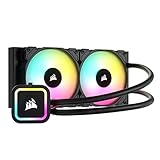
Shopping for a 360 mm all-in-one liquid cooler puts you in front of dozens of near-identical options, and most differentiate themselves through software rather than hardware. The ARCTIC Liquid Freezer III 360 A-RGB Review audience tends to be different: you want thermal headroom for a hot Ryzen or Core i9 without paying a premium for an ecosystem you don’t need.
ARCTIC takes a hardware-first approach here, bundling an Intel contact frame, native 5 mm AMD offset mounting, and a small VRM fan built into the pump housing, backed by a six-year warranty.

- LGA1700 AND LGA1851 CONTACT FRAME: Improved contact pressure distribution through Intel mounting frame for efficient heat transfer, thanks to even CPU contact surface
- NATIVE AMD OFFSET MOUNTING: Optimized for the multi-die chiplet design of Ryzen processors - 5mm offset for optimal coverage of the CPU hotspot, resulting in more efficient heat transfer
- ACTIVE COOLING OF THE VOLTAGE CONVERTERS: PWM-controlled VRM fan that additionally cools components in the base area, such as voltage converters

The radiator measures roughly 15.67 by 4.72 by 2.48 inches. The fans run from 200 to 1800 RPM under PWM control, and the fan cables are routed inside the tubing sleeve so a single connector reaches your motherboard.
Bottom Line
If you want strong thermal performance and clean cable routing without subscribing to another RGB software suite, the Liquid Freezer III 360 A-RGB earns its place on the shortlist. Check current availability and pricing on Amazon.
ARCTIC Liquid Freezer III 360 A-RGB Overview
Three 120 mm A-RGB fans sit on a thicker-than-average aluminum radiator, paired with a copper cold plate that uses micro-skived fins for surface area. The assembly weighs about 1,870 grams, so plan for a case with solid radiator mounting points.
Power draw is modest at 12 volts through a standard 4-pin PWM connector. Fan speed scales from a near-silent 200 RPM floor up to 1800 RPM, with the pump rated to 2000 RPM.
ARCTIC covers the unit for six years, which is longer than most AIO warranties in this class. For broader context on where 360 mm units sit in a build, our liquid cooled gaming PC coverage is a useful companion read.
360 mm Cooling Performance
Thermal output is where this cooler earns its reputation, and owners consistently report large drops after switching from other AIOs. One buyer moving from a premium competitor described going from thermal throttling under sustained rendering loads to comfortable temperatures across the same workload.
The thick radiator does much of that work. Extra fin depth gives the three fans more surface to push through, so you get useful cooling at lower RPM instead of relying on fan speed alone.
At the 200 RPM minimum, the fans are effectively inaudible during desktop use. Under full load, the noise is present but not harsh, and the curve responds predictably to PWM control from BIOS.
If you’re cross-shopping, the Cooler Master 360 Atmos white liquid cooler review covers a comparable triple-fan design at a similar radiator size.
AMD Offset Mounting and Intel Contact Frame
Mounting hardware is the quiet differentiator here. On AMD systems, the cold plate sits with a 5 mm offset toward the chiplet hotspot, which matches how heat is distributed on Ryzen’s multi-die layout rather than centering over the IHS midpoint.
Intel builds get a bundled contact frame for LGA1700 and LGA1851. The frame replaces the stock ILM, reducing socket bending and spreading clamping pressure more evenly across the die area.
Installation uses a two-screw leaf spring mechanism that owners describe as straightforward. One note worth checking before you order: some listings carry the Pro variant with a contact frame geometry tuned for Intel’s 200-series chips, so verify the model number matches your socket generation.
VRM Cooling and Cleaner Cable Routing
A small PWM-controlled fan built into the pump block blows air across the VRM area, which helps on boards where the socket-adjacent heatsinks get little airflow in an all-liquid build. It ramps with the same PWM signal, so it stays quiet at idle.
The fan is not universally loved. Some owners have reported audible noise from it after a few days of use, and it’s the single most cited complaint in feedback.
Cable management is handled by running the radiator fan wiring inside the tube sleeving. One PWM lead reaches the motherboard, plus the A-RGB connector, which keeps the top of the case tidy.
Fit, Case Space, and Motherboard Clearance
Radiator thickness and tube stiffness make this a cooler that rewards measuring twice before ordering.
Intel and AMD Socket Support
The mounting kit covers Intel LGA1700 and LGA1851 alongside AMD AM4 and AM5. Older Intel sockets are not part of the bundle, so confirm your platform before buying.
Radiator Space and M.2 Clearance
ARCTIC flags a known conflict: oversized heatsinks on the M.2_1 slot can interfere with the pump housing on certain boards. The compatibility checker on ARCTIC’s site lists affected models and workarounds.
Owners with mid-tower cases have described the fit as tight but workable, including in the Montech King 95 Pro. The tubes are stiff, so orientation planning matters when the radiator goes up top.
Reviews of alternatives like the ID-COOLING FX360 INF liquid CPU cooler can help if clearance rules this one out.
Pros and Cons
| Category | Details |
|---|---|
| Best for | High-TDP Ryzen and Core i7/i9 builds |
| Watch for | M.2 slot clearance, stiff tubing, VRM fan noise |
| Warranty | Six years |
Pros
- Thick radiator delivers strong cooling at low fan speeds
- Native 5 mm AMD offset and included Intel contact frame
- Integrated fan cabling means one visible lead to the motherboard
- Simple two-screw spring mount
- Long warranty coverage
Cons
- VRM fan has generated noise complaints from some owners
- Rigid tubing limits routing flexibility in tight cases
- Documented interference with tall M.2_1 heatsinks on select boards
- A-RGB requires motherboard software instead of a dedicated app
Customer Reviews and Long-Term Impressions
Feedback skews strongly positive, with build quality and thermal results drawing the most consistent praise across a large review base.
What Owners Like Most
Buyers repeatedly highlight the temperature drop after switching from other AIOs, including significantly more expensive models. Materials and finish also come up often, along with how quickly the mounting hardware goes together.
Spanish-language reviews echo the same points, praising cooling over previous 240 mm units while flagging the stiff tubes as something to plan around.
Common Installation and Compatibility Concerns
The recurring issues are physical, not thermal. Tight case fits, hard tubing, and the M.2 heatsink conflict account for most negative comments.
A separate thread involves listing confusion between standard and Pro variants, so match the part number to your CPU generation at checkout. For comparison shopping, the Corsair iCUE Link Titan 360 RX RGB liquid CPU cooler takes the software-ecosystem route instead.
Conclusion
For builders running hot processors who care more about thermal headroom than proprietary lighting software, this cooler delivers on the fundamentals: a thick radiator, correct mounting geometry for both platforms, and hardware that ships complete in the box.
Before ordering, measure your case’s top or front radiator clearance against the 15.67 by 4.72 by 2.48 inch dimensions. Run your motherboard through ARCTIC’s compatibility check if it has a tall M.2_1 heatsink, and confirm the part number reads ACFRE00144A if you want the standard A-RGB version.
Frequently Asked Questions
Is the ARCTIC Liquid Freezer III 360 A-RGB good for gaming PCs?
Yes, it handles gaming loads with room to spare on high-TDP CPUs. Owners upgrading from weaker AIOs report large drops in both gaming and sustained rendering temperatures, and the fans stay quiet at the low end of their 200 to 1800 RPM range.
Will the ARCTIC Liquid Freezer III 360 A-RGB fit my PC case?
Check for at least 15.67 inches of radiator length and 2.48 inches of clearance including fans. The radiator is thicker than many 360 mm units, and the tubing is stiff, so cases with tight top clearance may require front mounting.
Does this cooler support AMD AM5 and Intel LGA1700 systems?
Yes, the bundle includes mounting hardware for AM4, AM5, LGA1700, and LGA1851. AMD installations use a 5 mm offset toward the chiplet hotspot, and Intel builds get a contact frame that replaces the stock retention mechanism.
What is the purpose of the small VRM fan on the pump block?
It pushes air over the voltage regulator components near the socket, which lose passive airflow when a tower air cooler is replaced by an AIO. The fan runs on the same PWM signal as the radiator fans, though some owners have found it audible over time.
Is the ARCTIC Liquid Freezer III 360 A-RGB difficult to install?
The mounting itself is simple, using a two-screw spring bracket that owners describe as one of the easier systems to work with. The trickier part is routing the rigid tubes and checking that your M.2_1 heatsink doesn’t collide with the pump housing.
TechBytes

Our mission is to showcase the complex world of technology with comprehensive, accessible reviews. We bring you the freshest insights on everything from the most streamlined smartphones to the mightiest laptops, as well as the latest in smart home gadgets that simplify your daily routine and fitness wearables that monitor your well-being. Rest assured, we're here to guide you through the ever-evolving tech landscape.