
Thermaltake Arctic i360T R4 Review: Gaming Value

Shopping for a prebuilt that already handles cooling and cable management is a different exercise than pricing out parts one at a time. The Thermaltake Arctic i360T R4 puts a 12th Gen Intel Core i5-12600KF behind a 360mm closed-loop cooler and wraps the whole thing in a white open-frame chassis with thick tempered glass.

This Thermaltake Arctic i360T R4 review focuses on what the hardware delivers at 1080p, how the liquid cooling holds up over time, and where the case design limits your upgrade options later.
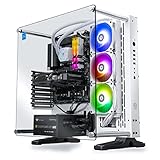
Thermaltake Arctic i360T R4 AIO Liquid Cooled Gaming Desktop (Intel Core™ i5-12600KF, Toughram DDR4 3600Mhz 16GB Memory, NVIDIA® GeForce RTX™ 3060 Ti, 1TB NVMe M.2, Win10 Home) P3AR-Z69R-36T-LCS
  • Intel Core i5-12600KF CPU Watercooled, Intel Z690 Chipset ATX motherboard, 16GB ToughRam DDR4 RGB, 1TB NVMe M.2, WiFi, Windows 10 Home
  • NVIDIA GeForce RTX 3060 Ti, 3x Display Port/1x HDMI
  • Closed Loop Liquid Cooling with 360mm Radiator

Thermaltake Arctic i360T R4

An RTX 3060 Ti with 8GB of GDDR6, 16GB of Toughram DDR4 at 3600MHz, and a 1TB NVMe M.2 drive round out the build. Wi-Fi 6E comes through the Z690 motherboard, and a keyboard and mouse ship in the box.

Bottom Line

If you want a well-cooled 1080p gaming desktop that looks the part on an open desk and skips the assembly work, this configuration earns its place.

Check current availability and pricing on Amazon.

Thermaltake Arctic i360T R4 Overview

Thermaltake built this machine around its own case, cooler, memory, and power supply, which explains why the parts fit together as cleanly as they do. The Z690 chipset supplies PCIe Gen4 lanes and Wi-Fi 6E, while the white P3 open-frame chassis leaves the internals on display behind a 5mm tempered glass panel.

Windows 10 Home ships preinstalled. Ports on the front cover two USB 3.0 and two USB 2.0 connections, plus headphone and microphone jacks.

Component Specification
CPU Intel Core i5-12600KF (10 cores)
GPU NVIDIA GeForce RTX 3060 Ti, 8GB GDDR6
Memory 16GB Toughram DDR4 3600MHz
Storage 1TB NVMe M.2 SSD
Cooling 360mm AIO closed-loop liquid
Networking Wi-Fi 6E

Who Is This Gaming Desktop Best For?

Players running a single 1080p monitor at high refresh rates get the most out of this configuration. The 3060 Ti and i5-12600KF pairing suits competitive shooters and mainstream AAA titles without pushing you toward a 1440p or 4K panel.

It also fits anyone who wants a liquid cooled gaming PC without mounting a radiator themselves. Buyers planning heavy internal expansion later should read the upgrade section first.

Intel Core i5-12600KF Gaming Performance

Ten cores split into six performance and four efficient cores give this chip real headroom in games and background tasks alike. The 12600KF was Intel’s value champion in the Alder Lake stack, and it still keeps pace with modern GPUs at 1080p without becoming the bottleneck.

The unlocked multiplier means overclocking headroom exists, and the 360mm radiator gives you the thermal budget to use it. Under sustained load, core temperatures stay well clear of throttling territory in a room at normal ambient temperature.

The KF suffix means no integrated graphics. Lose the discrete card and you lose display output entirely, which matters only during troubleshooting.

What Can the 10-Core Processor Handle?

Streaming while gaming works without stutter, since the efficiency cores absorb encoding and Discord overhead. Video editing in 1080p timelines, Lightroom exports, and code compilation all run comfortably.

Simulation-heavy titles that lean on CPU threads, such as Cities: Skylines II, Microsoft Flight Simulator, and large Total War battles, benefit most from the core count here.

NVIDIA GeForce RTX 3060 Ti Graphics

The 3060 Ti sits a clear step above the standard 3060 in raster performance, trading the 12GB frame buffer for a wider memory bus and more CUDA cores. Its 8GB of GDDR6 handles 1080p textures at maximum settings in nearly every current release.

Three DisplayPort outputs plus one HDMI let you run a multi-monitor setup without adapters. DLSS support extends the card’s useful life in newer titles that lean on upscaling.

Ray tracing works, though enabling it in demanding games usually means dropping to DLSS Quality mode to hold 60 fps.

Is It Still a Good Choice for 1080p Gaming?

Yes, particularly for high-refresh 1080p play. Esports titles clear 200 fps, and recent AAA games hold 70 to 100 fps at high settings.

If you compare it against the MSI Gaming GeForce RTX 3060 12GB, the Ti wins on frame rates while the non-Ti wins on VRAM capacity. At 1080p, frame rates matter more; at 1440p with heavy texture packs, the 8GB buffer starts to show its age.

360mm Liquid Cooling and Open-Frame Design

A full 360mm radiator on a 125W-class processor is generous, and the results show up as low fan speeds during normal gaming. The closed-loop unit ships preassembled and prefilled, so no maintenance is required beyond dusting the fins.

The white P3 chassis uses an open-frame layout with a single thick tempered glass panel rather than a fully enclosed box. Airflow benefits, and so does the visual effect of the RGB memory and pump block.

Compared with standalone units like the Cooler Master 360 Atmos White, this integrated setup gives up some fan tuning flexibility in exchange for zero installation work.

How Does the Panoramic Tempered-Glass Case Affect Everyday Use?

Dust accumulates faster than in a filtered enclosed case, so plan on using compressed air every couple of months. The open sides also mean fan noise reaches your ears more directly, though the large radiator keeps RPMs low enough that it stays unobtrusive.

The glass panel arrives well protected in shipping. Owners report the case surviving rough delivery handling with only minor cosmetic marks on the rear panel.

Storage, Memory, and Connectivity

A 1TB NVMe M.2 drive on PCIe Gen4 handles Windows plus a healthy game library, with sequential speeds that cut level load times noticeably against SATA SSDs. Two of the four DIMM slots hold the 16GB Toughram kit at 3600MHz, leaving two open and a 128GB ceiling.

Wi-Fi 6E on the Z690 board delivers 6GHz band access if your router supports it. Wired networking remains the better choice for competitive play.

Four USB ports on the front, two 3.0 and two 2.0, plus headphone and mic jacks cover peripherals without a hub for most setups.

What Comes Ready to Use Out of the Box?

Windows 10 Home is preinstalled and activated, and a QWERTY keyboard and mouse ship alongside the tower. Plug in a monitor via DisplayPort or HDMI, connect power, and you reach the desktop in minutes.

You supply the display and any wired network cable. Games download over Wi-Fi 6E without issue on a decent connection.

Upgrade Access and Long-Term Ownership

The motherboard and memory upgrade paths are straightforward: two free DIMM slots, five expansion slots, and a standard ATX Z690 board that accepts any LGA1700 processor from the 12th or 13th Gen lines. Swapping the GPU later is a normal PCIe operation.

The case design complicates one specific task. Adding 2.5-inch or 3.5-inch drives behind the rear panel is difficult because the panel does not detach the way most cases allow, and at least one owner discovered this after removing every visible screw.

Thermaltake covers the system with a one-year manufacturer warranty.

What Should Buyers Know Before Expanding Storage?

Plan storage growth around M.2 slots and external drives instead of internal 2.5-inch bays. A second NVMe drive installs on the motherboard without touching the rear panel, and a USB enclosure covers bulk media.

For long-term archives, pairing the internal SSD with a proper backup strategy and reliable storage solutions is the practical approach here.

Pros and Cons

Value drives the case for this machine, since the component list adds up to more than the assembled system commands at typical sale pricing.

Pros

  • 360mm AIO keeps the i5-12600KF cool and quiet under load
  • Component total exceeds the assembled system’s usual price
  • Wi-Fi 6E and PCIe Gen4 via the Z690 chipset
  • Open-frame white chassis with genuine 5mm tempered glass
  • Keyboard, mouse, and activated Windows included
  • Two free DIMM slots with a 128GB ceiling

Cons

  • Rear panel does not detach, blocking 2.5-inch drive installation
  • Ships with Windows 10 rather than a current Windows release
  • 8GB VRAM limits headroom at 1440p and above
  • One-year warranty is shorter than some competitors offer
  • Open frame collects dust faster than a filtered enclosure

Customer Reviews and Real-World Feedback

Feedback skews positive, with packaging quality and out-of-box condition coming up repeatedly across owner accounts. Several buyers who bought during price drops described the component value as strong relative to sourcing the parts individually.

Shipping protection earns specific praise. Multiple owners noted external box damage from carriers with no corresponding harm to the tower or its glass panel.

What Owners Like Most

The visual design draws consistent comments, particularly from buyers who chose the white version. Enthusiasts who already build their own systems described the specification sheet as competitive enough to skip a custom build.

One long-term owner reported two years of trouble-free gaming use before any component issue appeared.

Common Concerns From Verified Buyers

Storage expansion is the most concrete complaint. A buyer removed the rear panel screws expecting access and found the panel fixed in place.

One order arrived as the wrong configuration, so verifying the model on delivery is worth the two minutes. A separate owner had an AIO pump fail at roughly the 18-month mark and received a replacement cooler from Thermaltake within a week.

Conclusion

This build makes the most sense for a 1080p gamer who wants strong cooling and a display-worthy chassis without sourcing and assembling parts. The i5-12600KF and RTX 3060 Ti combination handles current titles at high settings, and the 360mm radiator gives the CPU room for overclocking that smaller coolers cannot support.

Check the model number against your order confirmation when the box arrives, and plan any storage expansion around the second M.2 slot. If you need internal 2.5-inch bays or a 1440p-capable frame buffer, look at other configurations before committing.

Frequently Asked Questions

Is the Thermaltake Arctic i360T R4 good for gaming?

Yes, this system handles 1080p gaming at high settings across current AAA and esports titles. The i5-12600KF supplies enough CPU throughput to keep the RTX 3060 Ti fed at high refresh rates, and the 360mm cooler prevents thermal throttling during long sessions.

What games can the RTX 3060 Ti run on this desktop?

Competitive titles like Valorant, CS2, and Apex Legends run well past 144 fps at 1080p. Demanding releases such as Cyberpunk 2077 and Alan Wake 2 need DLSS enabled to hold 60 fps with ray tracing, though they run comfortably at high settings without it.

Can the Thermaltake Arctic i360T R4 be upgraded?

Memory, GPU, and CPU upgrades are all straightforward on the standard ATX Z690 board, with two open DIMM slots supporting up to 128GB. Adding 2.5-inch or 3.5-inch drives is impractical because the rear panel does not detach, so route extra storage through the motherboard’s M.2 slot or external drives.

Does the Thermaltake Arctic i360T R4 include Wi-Fi?

Yes, the Z690 motherboard includes Wi-Fi 6E with 802.11ax support and access to the 6GHz band. An Ethernet port is available on the board for lower-latency wired connections during competitive play.

Is the 360mm liquid cooler reliable for long-term use?

The closed-loop unit requires no refilling or maintenance beyond keeping the radiator fins clear of dust. Pump failures can happen with any AIO, of course, and one owner whose pump failed around the 18-month mark received a replacement from Thermaltake within a week of contacting support.

Our mission is to showcase the complex world of technology with comprehensive, accessible reviews. We bring you the freshest insights on everything from the most streamlined smartphones to the mightiest laptops, as well as the latest in smart home gadgets that simplify your daily routine and fitness wearables that monitor your well-being. Rest assured, we're here to guide you through the ever-evolving tech landscape.

Corsair Vengeance i7500 Review: Is This 4K PC Worth It?

Shopping for a prebuilt that can drive a 4K display without compromise puts you in a small, expensive category, and the Corsair Vengeance i7500 sits near the top of it. Corsair pairs an Intel Core i9-14900KF with a GeForce RTX 4090, then wraps the whole thing in a 4000D Airflow case you can open, service, and upgrade much like a machine you built yourself.

With 64GB of DDR5-6000 memory, a 2TB NVMe SSD, and a 24GB flagship GPU, this build targets 4K gaming at high frame rates and heavy creative work without an obvious bottleneck.

Corsair Vengeance i7500 Series Gaming PC - Liquid Cooled Intel Core i9 14900KF CPU - NVIDIA GeForce RTX 4090 GPU - 64GB Vengeance RGB DDR5 Memory - 2TB M.2 SSD - Black
  • Liquid-Cooled 14th Gen Intel Core CPU: The latest in dynamic CPU architecture so you can game and multitask without compromise, cooled by a CORSAIR iCUE H100i RGB ELITE liquid CPU cooler.
  • NVIDIA GeForce RTX 40-Series Graphics: Experience lifelike virtual worlds with ray tracing and ultra-high FPS gaming with the lowest latency.
  • CORSAIR VENGEANCE RGB DDR5 Memory: High-performance memory, optimized for Intel and lined with stylish RGB LEDs.

Corsair Vengeance i7500 Gaming PC

Corsair uses its own parts throughout: an iCUE H100i RGB Elite liquid cooler, six SP RGB Elite fans with AirGuide, and Vengeance RGB DDR5. Windows 11 Pro ships preinstalled, while a two-year manufacturer warranty covers the system as a whole. That matters more on a prebuilt than it does with parts you source yourself.

The trade-off is price and a mixed ownership record. Buyers who received a correctly configured unit describe it in glowing terms, while a smaller group ran into fulfillment and reliability problems worth knowing about before you commit.

Bottom Line

If you want maximum 4K performance in a serviceable ATX chassis with one warranty covering everything, this Corsair build delivers.

Just inspect the packaging and verify your specs in Windows the day it arrives.

Check current availability and pricing for the Corsair Vengeance i7500 on Amazon.

Corsair Vengeance i7500 Series Gaming PC Overview

Everything here is chosen for headroom rather than cost savings. The configuration reviewed pairs the i9-14900KF with an RTX 4090, 64GB of Vengeance RGB DDR5 at 6000MHz, and a 2TB M.2 NVMe drive.

Component Specification
CPU Intel Core i9-14900KF (24 cores, up to 6.0GHz)
GPU NVIDIA GeForce RTX 4090, 24GB GDDR6X
Memory 64GB Corsair Vengeance RGB DDR5-6000
Storage 2TB M.2 NVMe SSD
Cooling iCUE H100i RGB Elite AIO, six SP RGB Elite fans
Case Corsair 4000D Airflow mid-tower, standard ATX
OS Windows 11 Pro
Warranty 2-year manufacturer

Wi-Fi, Bluetooth, and Ethernet are all onboard. At 30.8 pounds and roughly 18 inches tall, it needs a sturdy desk or a floor spot with enough clearance for the front intake.

Intel Core i9-14900KF Performance

Raw multithreaded throughput is the headline here. The 14900KF’s 24 cores and 36MB of cache chew through streaming encodes, Blender renders, and compile jobs while a game runs in the foreground. Boost clocks reach 6.0GHz on the best cores.

The KF designation means no integrated graphics, so the RTX 4090 handles every display output. That’s fine in a system like this, although it removes the fallback if the GPU ever fails.

Sustained all-core loads pull serious wattage, which is why the 1000W supply and 240mm cooler are here. In practice, gaming loads sit well below that ceiling, while productivity workloads are where you hear the fans ramp.

NVIDIA GeForce RTX 4090 Graphics

The 4090 remains the clearest reason to buy this machine. With 24GB of GDDR6X, it handles native 4K with ray tracing enabled in most titles and clears 100+ FPS in many games with DLSS turned on.

That memory pool also serves non-gaming work: local AI models, high-resolution video timelines, and large 3D scenes all benefit from the buffer that mid-range cards lack. Owners consistently point to the GPU as the part that justifies the outlay, expecting it to stay relevant for several years.

If you’re comparing tiers, our coverage of the ASUS Dual GeForce RTX 4060 EVO OC Edition shows how far apart the 1080p and 4K classes sit. Display output runs through HDMI and DisplayPort.

Liquid Cooling and Airflow Design

Thermal headroom comes from a 240mm AIO plus six intake and exhaust fans working together. The H100i RGB Elite mounts to the top of the 4000D Airflow, and the SP RGB Elite fans use Corsair’s AirGuide vanes to direct air toward the CPU socket and GPU rather than letting it scatter.

Under gaming loads, the system stays quiet enough for open-back headphones. Push a full-core render and the 14900KF will hit its thermal limits, which is normal behavior for this chip on a 240mm radiator.

If you want more thermal margin, a 360mm swap is straightforward in this case. Our guide to choosing a liquid cooled gaming PC covers what that buys you in sustained workloads.

RGB Control With Corsair iCUE

Lighting control is unified through iCUE, and that consistency is one of the practical advantages of an all-Corsair build. Fans, the pump head, and the DDR5 modules appear as one ecosystem, so you set a profile once instead of juggling three utilities.

Preset profiles cover most tastes, and per-device customization goes deep if you want it. Select games support real-time lighting reactions.

iCUE also serves as your monitoring dashboard for temperatures, fan curves, and pump speed. It runs in the background and does consume some resources, so trim its startup behavior if you prefer a lean system tray. Peripherals like the Corsair K55 Core RGB keyboard sync into the same profiles.

Setup, Ports, and Upgrade Potential

Getting running takes minutes: plug in a display, keyboard, and mouse, then complete the Windows 11 Pro setup. Buyers repeatedly describe the process as painless.

Front I/O is where the chassis draws criticism. The 4000D Airflow gives you two USB ports and a 3.5mm combo jack up top. One owner specifically wanted a third USB port and an optical audio output, neither of which the case provides.

Upgrades are the strong suit. Standard ATX parts, seven expansion slots, and no proprietary connectors mean you can swap the GPU, add drives, or replace the cooler with off-the-shelf components. Memory tops out at 64GB, which is already installed here.

Pros and Cons

Value depends heavily on whether you’d otherwise buy these Corsair parts individually.

Pros

  • RTX 4090 with 24GB VRAM delivers uncompromised 4K gaming and heavy creative performance
  • 64GB of DDR5-6000 and a 2TB NVMe drive leave no obvious bottleneck out of the box
  • Standard ATX layout in the 4000D Airflow makes future upgrades and repairs simple
  • Single two-year warranty covers every component, unlike a self-built system
  • iCUE unifies lighting and monitoring across cooler, fans, and memory

Cons

  • Premium pricing places it firmly in luxury territory
  • Only two front USB ports and no optical audio output on the chassis
  • Black-only chassis with no white variant offered
  • The 14900KF runs hot under sustained all-core loads
  • Some buyers reported fulfillment problems and one hardware failure after months of use

What Customer Reviews Reveal

Owner sentiment splits along a clear line: people who received the correct unit are enthusiastic, while the negative reviews cluster around fulfillment rather than design. Several buyers spent weeks or months researching before settling on this configuration and said the performance matched expectations.

Two accounts deserve attention. One buyer received a box with resealed tape and a loosely fitted plastic bag. Another reported a system arriving with cheaper components substituted for the advertised parts, consistent with a tampered return being resold.

A separate owner reported the machine failing after roughly six months of trouble-free use, which is where the two-year warranty earns its keep.

Practical advice: photograph the packaging on arrival, then open Task Manager and GPU-Z on day one and confirm the CPU, GPU, RAM capacity, and drive size against what you ordered.

Conclusion

This is a machine for someone who wants flagship 4K performance without sourcing and assembling parts, and who values one warranty covering the entire build. The 4090 and 64GB of DDR5 give it a long usable life, while the standard ATX chassis means you’re never locked out of upgrades.

Skip it if you game at 1080p or 1440p, where the GPU cost outpaces any benefit. Buyers who want a white chassis or more front-panel I/O should look elsewhere or plan a case swap.

For a lower-cost route to a similar cooling approach, our Corsair Vengeance i7400 review covers the step-down series. Verify your configuration the day the box arrives.

Frequently Asked Questions

Is the Corsair Vengeance i7500 good for 4K gaming?

Yes, the RTX 4090 and 24GB of GDDR6X make it one of the strongest 4K gaming options available in a prebuilt. Most current titles run at high settings with ray tracing at playable frame rates, and DLSS pushes many well past 100 FPS at 3840 x 2160.

Does the Corsair Vengeance i7500 have an RTX 4090?

This particular configuration ships with the NVIDIA GeForce RTX 4090 paired to the Core i9-14900KF. The i7500 series is sold in several GPU and CPU combinations, so check the style listing before ordering to confirm you’re getting the 4090 variant.

Can the Corsair Vengeance i7500 be upgraded later?

Yes, the standard ATX form factor and 4000D Airflow case accept off-the-shelf components with no proprietary parts. Seven expansion slots, open M.2 capacity, and a serviceable cooler mount let you replace the GPU, add storage, or fit a larger radiator down the road.

Is the Corsair Vengeance i7500 worth its premium price?

It makes sense if you need 4K performance today and want a single warranty covering every part, which owners cite as a meaningful comfort. At 1080p or 1440p resolutions, a lower-tier GPU delivers similar in-game results for considerably less money.

What warranty comes with the Corsair Vengeance i7500?

Corsair provides a two-year manufacturer warranty on the complete system. The coverage applies to the entire build rather than separate component warranties, so one support contact handles any failure, including the kind of mid-life issue one owner reported after six months.

Thermaltake LCGS Glacier 460 Gaming PC Review

Prebuilt gaming desktops usually force a trade-off between clean cable work and a reasonable price. The Thermaltake LCGS Glacier 460 sidesteps that by shipping with a 240mm closed-loop cooler and ARGB fans already wired up. It pairs an AMD Ryzen 5 5600X with an NVIDIA GeForce RTX 4060, putting it squarely in 1080p and 1440p territory.

If you want a liquid-cooled system that runs quietly at stock settings and plays current titles at high settings without tinkering, the Glacier 460 covers that ground with a B550 platform you can upgrade later.

Thermaltake LCGS Glacier 460 AIO Liquid Cooled CPU Gaming Desktop (AMD Ryzen™ 5 5600X 6-core, ToughRam DDR4 3600Mhz 16GB RGB Memory, NVIDIA® GeForce RTX™ 4060, 1TB NVMe M.2, WiFi) S3GL-B550-460-LCS
  • AMD Ryzen 5 5600X CPU Watercooled, AMD B550 Chipset mATX motherboard, 16GB ToughRam DDR4 RGB, 1TB NVMe M.2, WiFi
  • NVIDIA GeForce RTX 4060, 3x Display Port/1x HDMI
  • Closed Loop Liquid Cooling with 240mm Radiator

Thermaltake LCGS Glacier 460

The 16GB of ToughRam DDR4 running at 3600MHz, a 1TB NVMe M.2 drive, and Wi-Fi 6 round out a build that arrives ready to use, with Windows 11 preinstalled.

Bottom Line

The Glacier 460 makes sense if you value quiet operation and a tidy RGB interior over squeezing out the last few frames per second.

Six Zen 3 cores and an RTX 4060 handle esports titles and modern single-player games comfortably at 1080p.

Check current availability and pricing for the Thermaltake LCGS Glacier 460 on Amazon.

Thermaltake LCGS Glacier 460 AIO Liquid Cooled CPU Gaming Desktop Overview

Six cores and twelve threads at a 3.7GHz base clock give this build enough CPU headroom to keep an RTX 4060 fed in nearly every game.

The foundation is an AMD B550 micro-ATX motherboard on the AM4 socket, with four DIMM slots supporting up to 128GB of DDR4. Two of those slots are occupied by the included 16GB ToughRam kit.

Component Specification
CPU AMD Ryzen 5 5600X (6C/12T, 3.7GHz base)
GPU NVIDIA GeForce RTX 4060, 8GB GDDR6
Memory 16GB DDR4-3600 RGB (4 slots total)
Storage 1TB NVMe M.2 SSD
Cooling 240mm AIO liquid cooler
Wireless Wi-Fi 6 (802.11ax)
OS Windows 11
Warranty 1 year, manufacturer

The chassis weighs roughly 41 pounds shipped, with a PSU shroud and seven expansion slots. If you want a larger radiator in a similar family, the Thermaltake Glacier 360 covers that configuration.

NVIDIA GeForce RTX 4060 Gaming Performance

At 1080p, the RTX 4060 delivers high-refresh frame rates in competitive shooters and holds 60fps-plus in demanding single-player titles with settings turned up.

The 8GB GDDR6 frame buffer is the practical ceiling here. Texture-heavy games at 1440p with ray tracing enabled will push against it, though DLSS 3 and Frame Generation recover much of that ground.

Ada Lovelace efficiency matters for a system this compact. The card draws modest power, so the whole build stays cool without aggressive fan curves.

Display output covers three DisplayPort connectors and one HDMI, supporting resolutions up to 3840 x 2160. For a closer look at how this GPU behaves as a standalone card, the ASUS Dual GeForce RTX 4060 EVO OC Edition 8GB GDDR6 review breaks down thermals and clock behavior in detail.

240mm Liquid Cooling and RGB Design

The dual-fan radiator keeps the 5600X well within its thermal envelope, and the acoustic payoff is noticeable during long sessions.

Thermaltake mounts the radiator vertically on the side panel behind a filtered vent, which frees up the top of the case and shortens tube runs. That layout also makes dust filter cleaning straightforward.

ARGB lighting covers the pump head, the fans, and the memory modules. Everything syncs through Thermaltake’s software, and you can dial it down to a single static color or turn it off entirely.

The 5600X has a 65W TDP, so a 240mm loop is more cooler than the chip strictly requires. That surplus is why the fans rarely spin up. If you’re weighing AIO options generally, the CoolerMaster MasterLiquid ML240L RGB V2 AIO CPU cooler review offers a useful 240mm reference point.

Everyday Speed, Storage, and Connectivity

Boot times land in the seconds thanks to the 1TB NVMe M.2 drive, and large game installs copy at speeds a SATA SSD cannot approach.

That 1TB fills faster than you expect once you install three or four modern titles. The B550 board gives you room to add drives without replacing the boot disk.

Front connectivity includes one USB 3.0 port, two USB 2.0 ports, plus separate headphone and microphone jacks. The USB count is lean for a desktop, so a powered hub is worth budgeting for if you run multiple peripherals.

Wi-Fi 6 handles wireless duty at 802.11ax speeds, which keeps latency reasonable for online play when Ethernet is not an option. Memory runs at 3600MHz, the sweet spot for Zen 3’s Infinity Fabric.

Pros and Cons

Pros

  • 240mm AIO keeps the 5600X cool and the system audibly quiet
  • Vertical radiator mount with a filtered intake simplifies maintenance
  • 1TB NVMe M.2 storage with fast load times out of the box
  • Four DIMM slots and seven expansion slots leave real upgrade room
  • Wi-Fi 6 built in, no adapter needed
  • ARGB lighting on the pump, fans, and RAM with software control

Cons

  • Only three USB ports total, with a single USB 3.0 among them
  • 8GB of VRAM limits texture settings at 1440p in newer titles
  • AM4 is a mature platform, so CPU upgrade paths are finite
  • One-year manufacturer warranty is shorter than some competitors offer
  • Ships with Windows 11, which surprised buyers expecting Windows 10

What Customer Reviews Reveal

Long-term owners report the machine running without issues after a full year, which speaks well of the cooling and component pairing.

Two themes come up repeatedly. Buyers consistently mention how quiet the system is, with several saying it’s hard to tell whether it’s powered on. The interior lighting also draws praise for looking better than expected at this price tier.

Performance feedback is concrete: one owner cites Call of Duty MW2 running above 130fps at maximum settings, while others describe simulator titles and GTA running smoother than anticipated.

The recurring criticism concerns the operating system. At least one buyer expected Windows 10 and received Windows 11 instead. A few also note that some setup knowledge helps during initial configuration.

Spanish-language feedback echoes the general sentiment, with buyers calling it a solid recommendation.

Conclusion

The Glacier 460 earns its place if quiet operation and clean cooling rank high on your list, and you play primarily at 1080p or 1440p with DLSS enabled.

The Ryzen 5 5600X remains a capable gaming chip, and pairing it with a 240mm loop means the CPU never becomes the noise source. That combination is uncommon at this price point among prebuilts.

Where you should pause: the three-port USB layout and the 8GB VRAM ceiling. Neither breaks the system, though both are worth knowing before you commit.

Plan on adding a second drive within the first year and budgeting for a USB hub. If you want a broader look at similar configurations, our coverage of liquid cooled gaming PC options and the Thermaltake LCGS Avalanche i477T review provide useful comparison points.

Frequently Asked Questions

Is the Thermaltake LCGS Glacier 460 good for modern gaming?

Yes, it handles current AAA titles at 1080p with high settings and works well at 1440p with DLSS enabled. The six-core Ryzen 5 5600X paired with the RTX 4060 avoids CPU bottlenecks in nearly all games. Ray tracing at 1440p is where you’ll need to compromise on texture quality.

What FPS can the RTX 4060 and Ryzen 5 5600X deliver?

Competitive titles like Call of Duty run well above 120fps at 1080p with maximum settings, based on owner reports. Demanding single-player games land in the 60 to 90fps range at 1080p high settings. Enabling DLSS 3 with Frame Generation pushes those numbers considerably higher in supported titles.

Does the Thermaltake LCGS Glacier 460 come with Windows installed?

The system ships with Windows 11 preinstalled and activated. Several buyers purchased expecting Windows 10 and were caught off guard, so confirm your operating system preference before ordering. Setup takes a few minutes of account configuration and driver updates.

Is 16GB of RAM enough for this gaming PC?

16GB of DDR4-3600 covers gaming and general multitasking comfortably in 2026. The B550 board has four DIMM slots supporting up to 128GB, so adding a matched 16GB kit later is straightforward. Heavy content creation or running many browser tabs alongside a game is where 32GB pays off.

Are Thermaltake gaming PCs reliable?

Owner feedback on this model points to reliable operation, with multiple buyers reporting a full year of trouble-free use. The one-year manufacturer warranty is shorter than what some competing prebuilts provide, though. Component quality on the cooling and power delivery side has held up in long-term use reports.

VIPRTECH Ghost 3.0 Gaming PC Review

Shopping for a prebuilt that arrives ready to game, without spending a weekend researching parts, has a certain appeal. The VIPRTECH Ghost 3.0 is aimed squarely at that buyer, pairing an eight-core Ryzen 7 3700X with an NVIDIA RTX 4060 8GB card inside a white RGB tower. Cooling comes from a 120mm all-in-one liquid loop.

This is a 1080p-first machine that handles 1440p in most titles, backed by a 1TB SSD, 16GB of DDR4, Windows 11 Pro, and a one-year warranty on a hand-built US assembly.

Sale
VIPRTECH Ghost 3.0 Gaming PC, Ryzen 7, RTX 4060 8GB, 16GB/1TB Arctic White | AMD Ryzen 7 (4.4Ghz Turbo), RTX 4060 8GB, 16GB DDR4 RAM, 1TB SSD, VR-Ready
  • High-Performance System Components: AMD Ryzen 7 3700X (8-Core/16-Thread 4.4GHz Turbo) | NVIDIA RTX 4060 8GB Graphics | 16GB DDR4 RAM | 1TB Solid-State Drive (SSD) | 120mm RGB Liquid-Cooler | 600W Gold-Rated PSU | Genuine Windows 11 Pro | RGB Lighting enabled case
  • RGB Lighting System: Showcase your internals with the built-in RGB lighting system, a must have for any gaming PC and sure to make your rig stand out. Controlled via a button on the case
  • Ultra-Fast Storage Performance: Enjoy insanely fast bootup times with the included 1TB Boot SSD, up to 30x faster than a traditional hard drive. Easily add additional storage if desired

VIPRTECH Ghost 3.0 Gaming PC

Wi-Fi and Bluetooth are built in, while the side panel opens for easy access. The RGB is toggled with a physical button, too, rather than software you have to install. At roughly 20 pounds and 15 x 8 x 19 inches, it fits under most desks without much fuss.

Bottom Line

For a first gaming rig or a straightforward upgrade from an aging desktop, this configuration covers modern titles at high settings and leaves room to add RAM and drives later.

Check current availability and pricing for the VIPRTECH Ghost 3.0 on Amazon

VIPRTECH Ghost 3.0 Gaming PC Overview

The hardware reads like a sensible mid-range build rather than a spec-sheet stunt. A Ryzen 7 3700X (8 cores, 16 threads, 4.4GHz boost) sits on an AM4 board alongside an RTX 4060 with 8GB of GDDR6, 16GB of DDR4, a 1TB SSD, and a 600W Gold-rated power supply.

Everything is assembled and stress-tested by hand in the US. The Arctic White finish and tempered access panel also give it a cleaner look than most black-on-black towers in this price bracket.

Who Is This Prebuilt Best For?

Buyers who want a plug-and-play gaming desktop and have no interest in sourcing parts will get the most out of it. It also suits streamers and hobbyist video editors, since the 3700X’s 16 threads handle encoding and timeline scrubbing better than a quad-core chip.

Enthusiasts chasing 4K ultra or 240Hz competitive frame rates should look at a tier above. For broader context, our gaming PC reviews cover higher-wattage builds.

Ryzen 7 3700X and RTX 4060 Gaming Performance

Frame rates land comfortably in high-refresh 1080p territory, with 1440p viable in most titles once DLSS is enabled. The RTX 4060 belongs to the Ada Lovelace generation, bringing DLSS 3 frame generation to supported games. That’s a meaningful boost in titles like Cyberpunk 2077 and Alan Wake 2.

The 3700X is a Zen 2 chip from 2019. It has plenty of threads for gaming, though its single-core speed trails newer Ryzen 5000 and 7000 parts, something that shows up in CPU-bound esports titles.

What Frame Rates Can Buyers Reasonably Expect?

Title / Setting 1080p High 1440p High
Fortnite (DX12) 130-160 FPS 85-105 FPS
Call of Duty: Warzone 110-140 FPS 75-95 FPS
Cyberpunk 2077 (DLSS Quality) 75-90 FPS 55-65 FPS
Counter-Strike 2 250-300 FPS 190-230 FPS

Ray tracing at 1440p pushes the 8GB frame buffer, so expect to dial textures down a notch. The ASUS Dual GeForce RTX 4060 EVO OC Edition review breaks down this GPU class in more detail.

1TB SSD Storage and 16GB DDR4 Memory

Boot times land in the seconds, and the 1TB capacity holds roughly eight to twelve modern AAA installs before you start uninstalling things. The listing specifies a SATA 6.0 Gb/s hard disk interface, so verify with the seller whether your unit ships with a SATA or NVMe drive. Buyers have reported both.

Memory is 16GB of DDR4 at 2400MHz, which is the weakest link in the build. Ryzen scales noticeably with faster RAM, and 3200MHz kits are inexpensive.

Room to Upgrade Storage and Memory

Two memory slots remain open, with support up to 128GB total. Adding storage is equally simple, and a drive like the Samsung 970 EVO Plus is a common second-drive pick if the board has a free M.2 slot.

One PCIe expansion slot is free for a capture card or sound card.

Liquid Cooling and Case-Controlled RGB Lighting

A 120mm AIO handles the 3700X, which is adequate given the chip’s 65W TDP. Under sustained load, temperatures stay reasonable, though a 120mm radiator has less headroom than the 240mm units found in pricier builds.

Lighting is controlled by a button on the case, cycling colors or running a rainbow cycle. No software install, no driver conflicts, no extra background process.

Arctic White Design and Internal Access

The white chassis with a hinged side door is the standout design choice here. Swinging the panel open to reach the internals beats unscrewing a tempered glass slab every time you add a drive.

Cable routing is tidy for the price bracket. If you want to compare cooling approaches across builds, our overview of liquid cooled gaming PC options covers radiator sizing tradeoffs.

Wi-Fi, Bluetooth, and Everyday Connectivity

Wireless comes standard, with Wi-Fi and Bluetooth antennas included in the box. The listed 802.11g/n support is dated by current standards, so anyone on a modern router will see better throughput running Ethernet or dropping in a Wi-Fi 6 card.

Bluetooth handles controllers, headsets, and wireless keyboards without a dongle, which clears up a USB port or two.

Ports and Display Support

Nine USB ports total give you room for a full peripheral setup plus external drives. Video output covers one HDMI port and DisplayPort, with four component outputs listed for multi-monitor configurations.

Maximum supported resolution is 3840 x 2160, so a 4K display works for desktop and media even where gaming runs better at 1440p. Anyone upgrading their network alongside the PC will find Wi-Fi 7 mesh systems worth reading about.

Setup Experience, Windows 11 Pro, and Warranty

Out-of-box setup is straightforward: connect the display, keyboard, mouse, and power, then boot into Windows 11 Pro. The box includes antennas, a power cable, and a setup guide.

Warranty coverage runs one year on labor, and support is reachable by phone. Several buyers have described fast turnarounds on shipping issues.

Configuration Details Buyers Should Confirm

Two things are worth verifying before you order. The listing’s model number references components that differ from the headline specs, and some customers have needed to contact support directly to obtain a Windows activation key.

Confirm the exact CPU, GPU, RAM speed, and drive type with the seller in writing. That five-minute exchange prevents the most common frustration reported with this brand. If you want a comparison point, the Skytech Chronos gaming PC desktop review covers a similarly positioned prebuilt.

Pros and Cons

Pros

  • Eight-core, 16-thread Ryzen 7 3700X handles streaming and editing alongside gaming
  • RTX 4060 with DLSS 3 delivers strong 1080p and capable 1440p frame rates
  • Button-controlled RGB avoids bloated lighting software
  • Hinged side door makes upgrades and dusting easy
  • Two free DIMM slots support up to 128GB of DDR4
  • Assembled and stress-tested in the US with a one-year warranty
  • Wi-Fi and Bluetooth included, no dongles required

Cons

  • 2400MHz DDR4 leaves Ryzen performance on the table
  • 802.11g/n Wi-Fi standard lags behind current routers
  • Zen 2 architecture trails newer chips in single-core speed
  • 8GB VRAM constrains ray tracing at 1440p
  • Model number and listed specs don’t align cleanly
  • Windows activation has required a support call for some buyers
  • 120mm radiator offers limited overclocking headroom

What Customer Reviews Reveal

Feedback splits into two clear camps: buyers who received a working machine and are happy with it, and buyers who hit a snag on day one. The rating sits in the low-4 range across nearly two hundred reviews, which reflects that divide.

Praise for Plug-and-Play Performance

Owners who had a clean arrival describe the setup as close to plug and play, with the machine running well from the first boot. Several highlight the side-opening panel and the ability to pick a static color or rainbow cycle as small quality-of-life wins.

One reviewer researched extensively before buying it as a gift and reported satisfaction. Another acknowledged the value-tier SSD and RAM brands while noting they perform acceptably.

Reported Setup and Activation Concerns

The recurring complaints involve Windows activation keys and missing accessory packages. Multiple buyers had to call support for a key, and one described a shipment arriving without its accessory box. The issue was resolved within an hour by phone.

A smaller number reported boot loops requiring outside repair. Testing thoroughly within the return window is the practical response.

Conclusion

This build makes sense for someone who wants a capable 1080p and 1440p gaming machine without assembling one. The Ryzen 7 and RTX 4060 pairing covers current AAA titles at high settings, VR headsets run without compromise, and the eight-core CPU gives streaming and editing workloads real breathing room.

Budget an extra $50 for a 3200MHz DDR4 kit; that single change unlocks measurable frame rate gains on Ryzen. Confirm the exact configuration with the seller before ordering, boot it the day it arrives, and run a demanding title for an hour while the return window is still open.

Frequently Asked Questions

Is the VIPRTECH Ghost 3.0 good for gaming?

Yes, it handles current AAA titles at high settings in 1080p and manages 1440p in most games with DLSS enabled. The eight-core Ryzen 7 3700X and RTX 4060 combination also supports VR headsets and streaming without dropped frames.

Can the VIPRTECH Ghost 3.0 run modern games at high settings?

It runs the majority of 2025 and 2026 releases at high or ultra presets in 1080p. At 1440p with ray tracing enabled, you’ll want DLSS Quality mode and slightly reduced texture settings to stay above 60 FPS.

Is the RTX 4060 8GB enough for 1080p and 1440p gaming?

The RTX 4060’s 8GB frame buffer is comfortable at 1080p and workable at 1440p in most titles. Heavy ray tracing and ultra texture packs at 1440p push against that VRAM ceiling, which is where you’ll see stutter.

Can I upgrade the RAM and storage in the VIPRTECH Ghost 3.0?

Yes, two DIMM slots are free with support up to 128GB of DDR4, and there’s a PCIe expansion slot plus room for additional drives. Swapping the 2400MHz memory for a 3200MHz kit is the single most cost-effective upgrade on this platform.

Does the VIPRTECH Ghost 3.0 include Wi-Fi and Bluetooth?

Both are built in, and the antennas ship in the box. The Wi-Fi standard listed is 802.11g/n, so a wired connection or an aftermarket Wi-Fi 6 card gives better speeds on a modern router.

Is VIPRTECH a reliable prebuilt gaming PC brand?

VIPRTECH builds and stress-tests each unit by hand in the US, then backs it with a one-year warranty. Most owners report receiving a working machine, although some have mentioned Windows activation-key problems or occasional missing items in the shipment. Both issues have reportedly been resolved through phone support.

Thermaltake Glacier 360 Review: RTX 3060 Gaming PC

Shopping for a prebuilt that arrives ready to game, without the hunt for parts or the risk of a first-time build going sideways? The Thermaltake Glacier 360 pairs a Ryzen 5 5600X with an RTX 3060 inside a white mid-tower. The whole CPU side runs on a closed-loop cooler with a 240mm radiator.

This is a 1080p-focused machine built for high-refresh play, and the liquid cooling plus ToughRAM RGB give it a look that most budget prebuilts do not attempt. Storage lands at 1TB of NVMe M.2, memory sits at 16GB of DDR4 running 3600MHz, and Wi-Fi comes built in.

Thermaltake Glacier 360 Liquid-Cooled PC (AMD Ryzen 5 5600X, RTX 3060, 16GB 3600Mhz DDR4 ToughRAM RGB Memory, 1TB NVMe M.2, WiFi, Win 10 Home) Gaming Desktop Computer S3WT-B550-G36-LCS,White
  • AMD Ryzen 5 5600X CPU Watercooled, AMD B550 Chipset mATX motherboard, 16GB ToughRam DDR4 RGB, 1TB NVMe M.2, WiFi, Windows 10 Home
  • NVIDIA GeForce RTX 3060. Graphics card brand may vary
  • Closed Loop Liquid Cooling with 240mm Radiator and 3 ARGB Fan

Thermaltake Glacier 360 Liquid-Cooled Gaming PC

The swing-door tempered glass panel mounts magnetically, three ARGB fans light the interior, and a B550 mATX board handles the AM4 socket duties. It ships with Windows 10 Home already installed.

Bottom Line

If you want a liquid-cooled gaming desktop that plays modern titles at 1080p without a build project attached, this one earns a look.

The Ryzen 5 5600X and RTX 3060 pairing remains a sensible match, and the case genuinely stands out on a desk.

Check current availability and pricing on Amazon

Thermaltake Glacier 360 Liquid-Cooled PC Overview

Model S3WT-B550-G36-LCS is a white mATX gaming tower built around AM4 hardware and a factory-installed AIO. The Ryzen 5 5600X brings six cores with a 4.6GHz boost, the B550 chipset board supplies four DIMM slots, and 16GB of Thermaltake ToughRAM RGB runs at 3600MHz.

Storage is a single 1TB NVMe M.2 drive, so boot times and level loads stay quick. Wi-Fi (5GHz capable) and Windows 10 Home are included, along with a keyboard.

Thermaltake covers the system with a one-year manufacturer warranty.

Who Is This Gaming Desktop Best For?

First-time desktop owners and console players moving to PC get the most out of it. You skip parts sourcing, cable routing, and AIO mounting, and you still land on hardware that handles current games at 1080p.

Enthusiasts who plan to swap a GPU next year will find the AM4 platform limiting, since AM5 is where new Ryzen chips live now.

NVIDIA GeForce RTX 3060 Gaming Graphics

Ray tracing and DLSS both come along with the RTX 3060, and that combination still carries weight at 1080p in 2026. Thermaltake sources the card from varying board partners, so the exact cooler shroud and clock profile differ between units.

DLSS is the feature that stretches this card furthest. Turning it on in supported titles buys you headroom for ray-traced reflections that the raw silicon would otherwise struggle with.

Card comparisons like the MSI Gaming GeForce RTX 3060 12GB and the ASUS Dual RTX 3060 V2 OC give a sense of what board partners do differently with the same GPU.

What Gaming Performance Can Buyers Expect?

Competitive shooters at 1080p run comfortably above 100 fps on medium to high settings. Owners report Warzone holding 120+ fps on low and staying playable with settings pushed up.

Scenario Realistic Expectation
Esports titles, 1080p 144 fps+
AAA titles, 1080p high 60 to 90 fps
Ray tracing on, 1080p 45 to 60 fps with DLSS
1440p high 50 to 70 fps in most titles

AMD Ryzen 5 5600X and Liquid Cooling

Six cores and twelve threads at up to 4.6GHz still cover gaming duty well, and the 5600X was the value pick of the Zen 3 lineup for good reason. It pairs cleanly with an RTX 3060 without bottlenecking the card at 1080p.

The closed-loop cooler uses a 240mm radiator with ARGB fans, plus a third fan in the chassis. Thermaltake’s own Glacier 460 sits above this configuration for anyone weighing the step up.

Streaming while gaming stays workable, though heavy encode plus a demanding title will lean on those six cores.

How Does the 240mm Cooler Support Daily Gaming?

The 5600X has a 65W TDP, so a 240mm loop gives it far more cooling than it needs. Load temps stay low, fan speeds stay modest, and the machine runs quieter than a tower-cooler build under the same load.

Pump noise is the variable worth listening for during the first week. If you want context on what standalone AIOs deliver, the Arctic Liquid Freezer III 360 sets a useful benchmark.

16GB DDR4 Memory and 1TB NVMe Storage

Two 8GB ToughRAM RGB sticks at 3600MHz fill half the board’s four slots, leaving room to reach 64GB later. That 3600MHz speed matches the sweet spot for Zen 3, where Infinity Fabric runs 1:1 with memory clock.

The 1TB NVMe M.2 drive handles the OS and a working set of games. Sequential speeds on a Gen3 or Gen4 M.2 drive make Windows boot in seconds and cut open-world texture pop-in noticeably.

Adding a second NVMe SSD is the cheapest meaningful upgrade you can make to this system.

Is the Included Capacity Enough for Modern Game Libraries?

Sixteen gigabytes covers gaming and browser tabs today, and 1TB fits roughly eight to twelve large modern installs. Call of Duty alone eats a sizable chunk.

If you keep more than a dozen big titles installed, plan on a second drive within the first year. The B550 board and available slots make both memory and storage expansion straightforward.

Tempered-Glass Case, Wi-Fi, and Connectivity

The swing-door tempered glass panel mounts magnetically, which makes opening the side for dusting a five-second job with no screws. Dust filtration is built in, and the white finish with ARGB lighting reads cleaner than the usual black gaming boxes.

Front I/O covers one USB 3.0 port, two USB 2.0 ports, and separate headphone and mic jacks. Video output runs through HDMI and DisplayPort on the graphics card, and 5GHz Wi-Fi handles wireless networking.

What Should Buyers Know About Expansion and Ports?

Front-panel USB is thin by 2026 standards, with a single USB 3.0 port up top. A powered hub solves it inexpensively.

The mATX board keeps expansion modest: four total expansion slots and no room for large multi-card setups. Some owners describe the motherboard as basic for the system’s price, which is a fair read of most prebuilts at this tier.

Pros and Cons

Judged against similarly specced prebuilts, this system earns its place on cooling and looks while giving up some board quality.

Pros

  • Factory-installed 240mm liquid cooling with ARGB fans, unusual at this price
  • Ryzen 5 5600X and RTX 3060 remain a well-balanced 1080p pairing
  • 3600MHz DDR4 matches the ideal ratio for Zen 3 memory performance
  • Magnetic swing-door glass panel makes interior access painless
  • Four DIMM slots and open M.2 capacity leave upgrade headroom
  • White chassis with filtration looks sharper than typical budget towers

Cons

  • Entry-level B550 mATX board limits serious enthusiast tinkering
  • Single front USB 3.0 port feels dated
  • AM4 socket is an end-of-life platform for CPU upgrades
  • One-year warranty is shorter than some competing prebuilt coverage
  • A handful of owners report stability problems after several months

Customer Reviews and Long-Term Ownership Feedback

Feedback skews positive, with buyers generally satisfied on performance and appearance while a smaller group reports reliability trouble. The reviews split fairly cleanly between people who got a solid unit and people who did not.

What Owners Like Most

Frame rates draw the most praise. Buyers describe running GTA V, PUBG, and Warzone at high settings without issues, and several mention the machine outperforming what they expected from the spec sheet.

The build quality and looks come up repeatedly. One owner upgrading from a low-end prebuilt with a GT 1030 called the jump dramatic, and several bought it specifically because the case appealed to them.

What Concerns Appear in Reviews

Blue screens and crashes surface in a minority of reports, sometimes after weeks of normal use. One reviewer updated their post to note frequent crashes during gaming or with multiple browser tabs open.

Component selection is the other recurring note. Buyers who opened the case describe the motherboard and a few internal parts as more basic than they anticipated, even while the system worked as advertised.

Conclusion

The Glacier 360 makes the most sense if you want a liquid-cooled machine that arrives working and looks good doing it. At 1080p, the Ryzen 5 5600X and RTX 3060 handle current games at high settings, and the 3600MHz memory is correctly specced for the platform.

Weigh the AM4 socket carefully if long-term CPU upgrades matter to you, since that path ends with Zen 3. The GPU, memory, and storage all remain replaceable.

Budget for a second NVMe drive and a USB hub, register the warranty on arrival, and run a few hours of stress testing in the first two weeks while returns are still open.

Frequently Asked Questions

Is the Thermaltake Glacier 360 good for 1080p gaming?

Yes, 1080p is where this system is happiest. The RTX 3060 delivers high settings in most current titles at 60 to 100 fps, and esports games clear 144 fps on a high-refresh monitor.

Can the Thermaltake Glacier 360 run Warzone smoothly?

Warzone runs well on this configuration, with owners reporting 120+ fps at 1080p on low settings. Pushing to high settings drops frame rates but keeps gameplay smooth on a 1080p display.

Does the Thermaltake Glacier 360 use an RTX 3060 graphics card?

Yes, the system ships with an NVIDIA GeForce RTX 3060. Thermaltake notes the graphics card brand varies, so the board partner and cooler design differ between individual units.

Can the RAM and storage in the Thermaltake Glacier 360 be upgraded?

Both are upgradeable. The B550 board has four DIMM slots supporting up to 64GB of DDR4, and additional storage installs via open drive bays or a second M.2 slot.

Is liquid cooling worth it in the Thermaltake Glacier 360?

The 240mm loop keeps the 65W Ryzen 5 5600X well under thermal limits and runs quieter than a stock air cooler under sustained load. The bigger draw is the aesthetic, since the CPU does not need this much cooling capacity.

Are Thermaltake prebuilt gaming PCs reliable?

Most owners report trouble-free operation with this model, though a minority mention crashes or blue screens after a few months. It’s worth testing the system thoroughly during the return window and keeping the one-year warranty details handy, as with any prebuilt.

Liquid Cooled Gaming PC: Optimizing Performance

Liquid Cooled Gaming PC: Optimizing Performance and Longevity

Gaming PCs are the powerhouses of the computer world, offering top-notch performance that caters to the demanding needs of gamers and enthusiasts alike. As technology has advanced, so has the need for effective cooling solutions to handle the heat generated by powerful components. Liquid cooling systems have emerged as a popular choice for those seeking to maximize performance and maintain system stability. These systems utilize a coolant that circulates through pumps, tubes, and radiators, dissipating heat more efficiently than traditional air cooling.

A liquid cooled gaming PC specifically benefits from quieter operation, lower temperatures, and the potential for higher overclocking margins due to better temperature management. While air cooling is adequate for many, the precision and efficiency of liquid cooling are often preferred in cutting-edge gaming rigs, which demand peak performance during marathon gaming sessions or intensive tasks like video editing and 3D rendering.

When considering a liquid cooled gaming PC, important factors include the quality of the liquid cooling system, the compatibility with different PC cases, and the maintenance it requires. It’s essential to ensure that the cooling system is reliable and well-constructed to prevent leaks that could damage components. Additionally, buyers should consider the type of liquid cooling — closed-loop (also known as all-in-one) or custom loop — as this will affect the complexity of installation and ongoing maintenance.

Choosing a liquid cooled gaming PC is about balancing power and cooling efficacy with aesthetics and system longevity. Understanding these aspects will lead to a more satisfying gaming experience and a machine that stands the test of time. Moving forward, the focus will be on identifying specific features and benefits that make liquid cooled gaming PCs a worthwhile investment for serious gamers.

Top Liquid-Cooled Gaming PCs

Liquid-cooled gaming PCs have become a popular choice for players seeking maximum performance without the noise commonly associated with air-cooled systems. The incorporation of liquid cooling technology allows these machines to keep their processors and graphics cards at lower temperatures, potentially prolonging their lifespan and enabling higher levels of overclocking for increased speed. The following list includes some of the best liquid-cooled gaming PCs on the market, selected based on their cooling efficiency, build quality, and performance metrics. Whether a casual player or a hardcore enthusiast, these PCs are designed to deliver an exceptional gaming experience.

Thermaltake Arctic i360T

Thermaltake Arctic i360T R4 AIO Liquid Cooled Gaming Desktop (Intel Core™ i5-12600KF, Toughram DDR4 3600Mhz 16GB Memory, NVIDIA® GeForce RTX™ 3060 Ti, 1TB NVMe M.2, Win10 Home) P3AR-Z69R-36T-LCS
  • Intel Core i5-12600KF CPU Watercooled, Intel Z690 Chipset ATX motherboard, 16GB ToughRam DDR4 RGB, 1TB NVMe M.2, WiFi, Windows 10 Home
  • NVIDIA GeForce RTX 3060 Ti, 3x Display Port/1x HDMI
  • Closed Loop Liquid Cooling with 360mm Radiator


Gamers in search of impressive performance and aesthetics will be drawn to the Thermaltake Arctic i360T.

Pros

  • Competitive price for the hardware included
  • Stylish design with a panoramic open-frame and tempered glass
  • Straightforward unboxing experience and robust packaging

Cons

  • Some may find the white color scheme limiting for their setup
  • Reports of minor cosmetic imperfections on arrival
  • Thermaltake’s reputation with power supplies may concern some buyers

The first thing one notices with the Arctic i360T is its striking panoramic open-frame design, showcasing the liquid-cooled components through the clear 5mm tempered glass. The cooling system is efficient, keeping the temperatures down even during intense gaming sessions. It’s like having an iceberg at the core of the machine – silent yet mighty.

Starting the PC straight out of the box was a breeze; no complicated setup was necessary. The build quality is commendable, frame robust, and components securely fitted. However, the all-white color scheme might clash with some users’ preferences who may look for more color options.

Performance-wise, it’s hard not to admire the seamless gameplay enabled by the Intel Core i5 and the NVIDIA GeForce RTX 3060 Ti combo. Multitasking or running high-resource games, the experience was fluid without any signs of lag. It serves both as an eye-catcher and a workhorse without the footprint of a typical tower.

There have been mentions of minor scuffs on the case upon arrival, which could point to handling issues. While these did not affect the PC’s performance, they could detract from the otherwise sleek appearance. It’s also worth noting that while this issue has been reported, it seems to be the exception rather than the rule.

ViprTech Ghost 3.0

Sale
VIPRTECH Ghost 3.0 Gaming PC, Ryzen 7, RTX 4060 8GB, 16GB/1TB Arctic White | AMD Ryzen 7 (4.4Ghz Turbo), RTX 4060 8GB, 16GB DDR4 RAM, 1TB SSD, VR-Ready
  • High-Performance System Components: AMD Ryzen 7 3700X (8-Core/16-Thread 4.4GHz Turbo) | NVIDIA RTX 4060 8GB Graphics | 16GB DDR4 RAM | 1TB Solid-State Drive (SSD) | 120mm RGB Liquid-Cooler | 600W Gold-Rated PSU | Genuine Windows 11 Pro | RGB Lighting enabled case
  • RGB Lighting System: Showcase your internals with the built-in RGB lighting system, a must have for any gaming PC and sure to make your rig stand out. Controlled via a button on the case
  • Ultra-Fast Storage Performance: Enjoy insanely fast bootup times with the included 1TB Boot SSD, up to 30x faster than a traditional hard drive. Easily add additional storage if desired


The ViprTech Ghost 3.0 is an excellent pick for gamers and creatives seeking a potent and aesthetically pleasing machine with lightning-fast performance.

Pros

  • Stellar gaming and multitasking performance
  • Gorgeous RGB lighting enhances aesthetics
  • Lightning-fast NVMe SSD facilitates quick boot and load times

Cons

  • May require additional storage for extensive game libraries
  • Some users report issues with temperatures during intense use
  • Customer support experiences vary among users

From the moment I powered on the ViprTech Ghost 3.0, I was struck by its swift boot times—thanks to the robust NVMe SSD. Running games in ultra settings was smooth as silk, with frame rates remaining high, demonstrating the power tucked within this sleek tower. The pre-installed Windows 11 Pro also meant access to the latest productivity tools and security features right off the bat.

Using several software programs simultaneously, including streaming and editing suites, was a test this rig passed with flying colors. The multitasking muscle of the Ghost 3.0 suggests it’s just as at home in a content creator’s studio as it is in a gaming setup—an appealing dual function for professionals with a foot in both worlds.

The design isn’t just about raw performance; it’s also a visual treat. The RGB lighting system, controllable with a press of a button on the case, emitted a soft glow that elevated the overall aesthetic of my gaming space. The crisp white casing stood out, adding a touch of elegance often missing in gaming hardware.

However, I did take note of the considerable space a library of modern titles might occupy, realizing that avid gamers may need to invest in additional storage solutions. Also, while the cooling system is generally effective, during marathon gaming sessions, I noticed a slight uptick in temperature readings, though not to a concerning degree. There were anecdotes of customer service interactions that ranged from highly efficient to somewhat less satisfying, suggesting variability in post-purchase support.

This gaming desktop machine doesn’t just promise performance; it delivers it consistently across various tasks. After spending several hours on both gaming and productivity tests, the ViprTech Ghost 3.0 established its worth as a versatile and robust companion for both play and work.

Thermaltake LCGS Glacier 460

Thermaltake LCGS Glacier 460 AIO Liquid Cooled CPU Gaming Desktop (AMD Ryzen™ 5 5600X 6-core, ToughRam DDR4 3600Mhz 16GB RGB Memory, NVIDIA® GeForce RTX™ 4060, 1TB NVMe M.2, WiFi) S3GL-B550-460-LCS
  • AMD Ryzen 5 5600X CPU Watercooled, AMD B550 Chipset mATX motherboard, 16GB ToughRam DDR4 RGB, 1TB NVMe M.2, WiFi
  • NVIDIA GeForce RTX 4060, 3x Display Port/1x HDMI
  • Closed Loop Liquid Cooling with 240mm Radiator


The Thermaltake LCGS Glacier 460 is a solid choice for gamers seeking a balance between performance and aesthetics, coupled with efficient cooling.

Pros

  • Efficient liquid cooling ensures peak performance during intensive gaming.
  • Customizable RGB memory adds flair and personalization to your setup.
  • Quick NVMe M.2 storage speeds up game load times and system responsiveness.

Cons

  • At a rating of 3.9, some users may have experienced issues that could affect overall satisfaction.
  • Might not satisfy the highest performance demands in future, more demanding games.
  • The 4060 might not perform as well with maxed-out settings at higher resolutions.

Upon unboxing the Glacier 460, its design commands attention, thanks to the flashy RGB memory sticks. It’s a system that doesn’t just fade into the background but instead, stands out in your setup. Powering it up, one finds that the AMD Ryzen 5 5600X processor and the RTX 4060 work harmoniously, delivering a gaming experience that runs smoothly even in more graphically demanding scenarios.

During gameplay, the liquid cooling system silently but effectively keeps temperatures in check. You can feel the difference it makes, especially during prolonged play sessions, where other systems might start to struggle. Ample storage is provided by a 1TB NVMe M.2 SSD, which translates to fast boot times and quick loading screens, making the entire gaming experience feel seamless.

In the world of ever-advancing game requirements, the Glacier 460 sits at a sweet spot of the current market. While it’s not at the pinnacle of power, its provisioned hardware presents a value that is difficult to overlook. For anyone dipping their toes into high-fidelity gaming or looking for a worthy upgrade, this PC is a contender, albeit with the caveat that even more demanding games on the horizon could stretch the 4060 to its limits.

Maintaining a neutral stance, this PC would be a commendable addition to any gamer’s arsenal, with the slight proviso that it might not be the absolute future-proof option for ultra-settings enthusiasts as the gaming industry moves forward.

Thermaltake Glacier 360

Thermaltake Glacier 360 Liquid-Cooled PC (AMD Ryzen 5 5600X, RTX 3060, 16GB 3600Mhz DDR4 ToughRAM RGB Memory, 1TB NVMe M.2, WiFi, Win 10 Home) Gaming Desktop Computer S3WT-B550-G36-LCS,White
  • AMD Ryzen 5 5600X CPU Watercooled, AMD B550 Chipset mATX motherboard, 16GB ToughRam DDR4 RGB, 1TB NVMe M.2, WiFi, Windows 10 Home
  • NVIDIA GeForce RTX 3060. Graphics card brand may vary
  • Closed Loop Liquid Cooling with 240mm Radiator and 3 ARGB Fan


Gamers seeking a seamless gaming experience with robust cooling solutions should consider the Thermaltake Glacier 360.

Pros

  • Exceptional cooling capabilities maintain performance stability
  • Visually striking design with RGB RAM and a transparent side panel
  • Generous storage with speedy 1TB NVMe M.2 SSD

Cons

  • Higher price point may not fit all budgets
  • Liquid cooling systems can be more complex to maintain
  • Some components may have limited upgrade paths

The Thermaltake Glacier 360 exudes confidence as soon as it powers on, its tempered glass panel showcasing the meticulously organized internal components and the harmonious glow of RGB lighting. The system runs whisper-quiet, even under load, thanks to its efficient closed-loop liquid cooling system. One can feel the dedication to build quality that Thermaltake has infused in every aspect of this desktop.

Users will appreciate the Glacier 360’s readiness right out of the box. The installation of Windows 10 Home is clean, without bloatware, paving the way for a smooth setup process. There’s also no overlooking the 1TB NVMe M.2 storage—launching games happens in the blink of an eye, and the generous capacity means there’s ample room for an extensive game library.

Despite the enthralling performance, one should note that the precision of the liquid cooling system comes with a responsibility to ensure it’s properly maintained. Additionally, those planning to heavily customize their rig in the future might find the upgrade path slightly restrictive due to the choice of components. Though, for many, the Glacier 360 will be a gaming fortress for years to come without the need for alterations.

In summary, the Thermaltake Glacier 360 stands tall as an attractive and powerful gaming machine that’s built to last. If it fits within the budget, it’s a purchase that’s hard to regret for anyone who desires top-tier gaming and computing performance married with striking aesthetics.

Corsair Vengeance i7500

Corsair Vengeance i7500 Series Gaming PC - Liquid Cooled Intel Core i9 14900KF CPU - NVIDIA GeForce RTX 4090 GPU - 64GB Vengeance RGB DDR5 Memory - 2TB M.2 SSD - Black
  • Liquid-Cooled 14th Gen Intel Core CPU: The latest in dynamic CPU architecture so you can game and multitask without compromise, cooled by a CORSAIR iCUE H100i RGB ELITE liquid CPU cooler.
  • NVIDIA GeForce RTX 40-Series Graphics: Experience lifelike virtual worlds with ray tracing and ultra-high FPS gaming with the lowest latency.
  • CORSAIR VENGEANCE RGB DDR5 Memory: High-performance memory, optimized for Intel and lined with stylish RGB LEDs.


One should consider this machine for its excellent cooling, high-end components, and RGB flair, although at a premium price point.

Pros

  • Superior thermal management with liquid cooling
  • Top-tier gaming performance courtesy of premium components
  • Aesthetic and functional RGB lighting controlled by iCUE software

Cons

  • Pricier than some competitive models
  • May be over-spec’d for casual gaming needs
  • Limited reviews suggest a need for more user feedback

Immersive gaming sessions were seamless, courtesy of the Corsair Vengeance i7500. It ran the latest titles with ease, showcasing the prowess of the liquid-cooled 14th Gen Intel Core CPU and the RTX 4090 GPU combo. The system barely broke a sweat, even during intense gaming bouts, maintaining admirable frame rates.

A notable feature is the machine’s design which meshes style with functionality. The RGB lighting isn’t just for show – with the iCUE software, one can orchestrate a whole ensemble of colors that complement in-game action, creating an enthralling ambiance. The roomy interior not only looks fantastic but also simplifies future upgrades.

Despite the compelling performance, the hefty price tag might be a deterrent for some. While the device is undeniably a powerhouse, gamers with a moderate appetite for performance might not fully utilize its vast potential. However, those who venture into content creation or heavy multitasking will find the investment justified, given its raw power and speed.

Buying Guide

Considerations for Compatibility

One should ensure the cooling system is compatible with their PC components. Key factors include:

  • CPU Socket Compatibility: Match the water block to the processor’s socket type.
  • Radiator Size: Confirm case size to accommodate the radiator.
  • Component Clearances: Verify space for pumps and tubing.

Performance Needs

Prioritize features based on the intended use of the PC:

  • Cooling Capacity: For high-performance gaming, opt for higher cooling efficiency.
  • Noise Level: Look for quieter operations if noise is a concern.
Feature Ideal for Gaming PCs
Cooling Efficiency High
Noise Level Low

Maintenance and Installation

Ease of installation and maintenance are crucial:

  • Installation: Prefer systems that offer straightforward installation processes.
  • Maintenance: Simple maintenance routines lead to longevity.

Aesthetics

For many, the visual aspect is important:

  • LED Lighting: Some coolants and components include LED lighting for a custom look.
  • Tubing Quality: Clear and durable tubing showcases the coolant.

Budget Considerations

Cost is always a key factor:

  • Initial Investment: Higher upfront cost for quality components.
  • Running Costs: Factor in electricity and potential maintenance expenses.

Durability and Warranty

Long-term reliability should not be overlooked:

  • Quality of Materials: High-quality materials can improve lifespan.
  • Warranty: A comprehensive warranty offers peace of mind.
Concern Consideration
Longevity High-quality materials & build
Warranty Lengthy and inclusive warranties

By thoroughly assessing each aspect, one can make an informed decision on the best liquid cooling system for their gaming PC needs.

Frequently Asked Questions

In this section, readers will get their questions answered on the specifics of liquid-cooled gaming PCs, maintenance requirements, cost considerations, and longevity.

What are the advantages of liquid cooling over air cooling in a gaming PC?

Liquid cooling is more efficient at heat dissipation than air cooling, allowing for quieter operation and potentially higher overclocking thresholds due to lower temperatures.

How often does a liquid cooling system need maintenance in a gaming PC?

A liquid cooling system generally requires maintenance every 6-12 months, which includes checking for leaks, cleaning the components, and replacing the coolant.

What should I consider when looking for a pre-built liquid cooled gaming PC?

When looking for a pre-built liquid-cooled gaming PC, one should consider the quality of the cooling components, the reputation of the manufacturer, and whether the system’s cooling capacity matches the hardware’s thermal demands.

How does the cost of a custom liquid cooled gaming PC compare to that of standard cooling options?

A custom liquid-cooled gaming PC typically incurs higher costs due to the need for specialized components like pumps, reservoirs, and custom fittings, compared to standard air-cooled systems.

Can a liquid cooled gaming PC be a cost-effective option for budget-conscious gamers?

For budget-conscious gamers, a liquid-cooled gaming PC may be cost-effective if they prioritize long-term performance and cooling efficiency, which can potentially extend the lifespan of components.

What is the expected lifespan of a liquid cooling system in a gaming PC?

The expected lifespan of a well-maintained liquid cooling system in a gaming PC is usually 5 years or more, depending on the quality of components and regularity of maintenance.

Click to access the login or register cheese