
Boxes of old slides and negatives tend to sit untouched for decades because getting them digitized feels like a project. The KODAK Slide N Scan Film & Slide Scanner exists to shorten that project considerably, turning 35mm slides and color or black-and-white negatives into digital files without a computer in the loop.
The appeal here is speed: you load film into a tray, press a single scan button, and the image lands on an SD card in seconds, which makes working through hundreds of frames realistic in an afternoon.
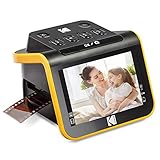
- SAVE OLD PHOTO MEMORIES: 1422MP Digital Film Scanner Lets You View, Edit and Convert Your Old Color and BandW Negatives 135, 110, 126mm and 50mm Slides 135, 110, 126mm to Digital Files and Save Directly to SD Card (NOT INCLUDED)
- 5” LCD DISPLAY WITH GALLERY MODE: Features Large, Crystal-Clear Screen with Wide Viewing Angle for Instantly Previewing and Editing Photos | Great for Sharing with Friends and Family or Using as an Elegant Digital Picture Frame in Home or Office
- CONVENIENT EASY-LOAD FILM INSERTS: Quick-Feeding Tray Technology Allows for Continuous Loading Action, Making Scanning Fast and Simple Includes 50mm Slide Holder, Adapters for 135, 110 and 126 Films, Cleaning Brush, USB and HDMI Cables

A 5-inch LCD sits on the front, letting you check framing, adjust color and brightness, and confirm each capture before moving on. The unit weighs a pound, takes up roughly the footprint of a coffee mug coaster, and runs on USB power.
Bottom Line
If you have a shoebox of family film and want results without learning scanning software, this Slide N Scan handles the job with minimal fuss.
Check current availability and pricing on Amazon.
KODAK Slide N Scan Film & Slide Scanner Overview
Everything needed to start converting film ships in the box: a 50mm slide holder, adapters for 135, 110, and 126 film, a cleaning brush, plus USB and HDMI cables. You supply the SD or SDHC card, which the unit supports up to 32GB.
The scanner measures 5.27 by 5.35 by 3.74 inches and draws 15 watts. A CMOS sensor handles capture at 24-bit color depth, with output rated at 22MP through interpolation from a 14MP native sensor.
Connection to a Windows 7 or newer computer happens over USB-C, while the HDMI port lets you push images to a television. Among the other options in the slide scanner category, this one clearly prioritizes standalone operation.
5-Inch LCD Preview and Gallery Mode
The screen is the feature that separates this model from cheaper units with 2-inch displays. At 5 inches and offering a wide viewing angle, it shows enough detail to judge exposure and color before you commit a frame to the card.
Gallery mode plays back everything stored on the SD card, so you can review a batch without pulling the card or connecting to a PC. Left on a desk, the unit even doubles as a small digital picture frame.
Color and brightness adjustments happen on-screen through the directional controls. The tradeoff is that a 5-inch LCD only reveals so much: soft focus or dust specks that pass unnoticed in the preview may show up when you view files at full size on a proper monitor.
22MP Conversion for Slides and Negatives
Film handling covers 135, 110, and 126 negatives in both color and black-and-white, along with 50mm slides. You select the film type in the menu, then feed frames through the quick-loading tray.
The capture process resembles a fast photograph of a backlit frame more than a traditional flatbed pass, which explains why a single scan takes about a second. That speed is the main argument for choosing this device over desktop scanning.
Results hold up well for prints up to standard sizes and for sharing digitally. If you need archival-grade output from a valuable transparency, a dedicated film scanner still wins on resolution and dynamic range. For broader comparisons, our roundup of the best scanner for negatives covers higher-end alternatives.
Pros and Cons
Pros
- No computer required for scanning, editing, or reviewing images
- Large 5-inch LCD makes previewing and framing straightforward
- Quick-feed trays support continuous loading through a stack of slides
- Single-button operation with on-screen film type, color, and brightness options
- Compact 1-pound body that stores easily between sessions
- HDMI and USB-C outputs for TV playback and file transfer
Cons
- SD card sold separately, capped at 32GB
- Film type setting resets between sessions on some units
- Interpolated 22MP output falls short of dedicated film scanner detail
- Small screen can hide focus and dust issues until viewed larger
- Printed instructions leave gaps that users often fill with online video guides
What Customer Reviews Reveal
Owners consistently describe the learning curve as short, with several noting they were scanning within minutes of unboxing. One reviewer worked through more than 2,000 images for a family Christmas project after being disappointed by a competing device.
Recurring praise centers on the screen size and on recovering images from badly degraded film. Even when the emulsion has deteriorated and the color has shifted, the scanner can pull out a usable frame.
The most common complaint involves having to reselect the film type each time the unit powers on. Others point out that the device captures a screen image of the backlit frame instead of performing a true optical scan, though most who mention it accept the tradeoff for the speed gained.
International buyers, including reviewers writing in Spanish and Arabic, report comparable satisfaction with output from 60-year-old slides. The product holds the top spot in its Amazon category with a strong rating across a large review base.
Conclusion
This scanner earns its place for anyone with a backlog of film who values finishing the job over squeezing maximum resolution from each frame. The standalone design means no software installation, no driver conflicts, and no tethered laptop.
Buy a 32GB SD card alongside it, and plan to reselect your film type at the start of each session. Expect roughly a second per frame once you find a rhythm with the tray.
Photographers preserving irreplaceable transparencies for large prints should budget for a dedicated film scanner. Everyone digitizing family history for albums, slideshows, and shared drives will find this handles the volume. Our kodak slide n scan scanner review and the digitnow 22mp all in 1 film slide scanner review offer additional context if you’re weighing similar models.
Frequently Asked Questions
Is the KODAK Slide N Scan easy to use for beginners?
Yes, the interface centers on one scan button plus a simple menu for film type and image adjustments. Most owners are producing files within the first few minutes, though the printed manual is thin enough that some turn to online walkthroughs for clarification on loading the trays.
What film formats can the KODAK Slide N Scan scan?
It handles 135, 110, and 126 negatives in color and black-and-white, plus 50mm slides in 135, 110, and 126 formats. Adapters for each format come in the box, and you select the matching film type on-screen before scanning.
Does the KODAK Slide N Scan include an SD card?
No, the SD card is a separate purchase. The unit accepts SD or SDHC cards up to 32GB, so pick one up before your first session if you want to save images directly to the device.
Is the KODAK Slide N Scan good enough for old family photos?
For family archives, yes. Owners report recovering usable images from slides more than 60 years old, including frames where chemical degradation has shifted the color. Output suits digital sharing and standard print sizes; museum-grade reproduction calls for higher-end equipment.
Can the KODAK Slide N Scan connect to a computer or TV?
Yes, it connects to any USB-C-enabled computer running Windows 7 or later for file transfer. An HDMI port also sends images to a television, which pairs nicely with gallery mode when you want to show a batch of scans to family on a larger screen.
TechBytes

Our mission is to showcase the complex world of technology with comprehensive, accessible reviews. We bring you the freshest insights on everything from the most streamlined smartphones to the mightiest laptops, as well as the latest in smart home gadgets that simplify your daily routine and fitness wearables that monitor your well-being. Rest assured, we're here to guide you through the ever-evolving tech landscape.
