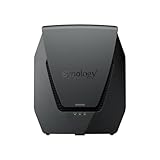
Shopping for a router that can keep up with a fiber connection and a house full of devices puts you in tricky territory. Most Wi-Fi 7 hardware pushes you toward tri-band designs with prices to match. The ASUS RT-BE88U takes a different route: dual-band Wi-Fi 7 paired with an unusually aggressive wired port layout.
With a 10G SFP+ cage, a 10G WAN/LAN port, and enough Ethernet jacks to retire a small switch, the RT-BE88U is built for people whose network lives as much on cable as it does on the air. Wireless throughput tops out around 7,200 Mbps, while a quad-core 2.6GHz processor handles the routing load.

- Blazing-fast WiFi 7 tech boosts throughput up to 7200Mbps with Multi-Link Operation and 4096-QAM.
- Bolster your wired network capacity up to 34G with one cutting-edge 10G SFP+ port and one standard 10G WAN/LAN port.
- Establish always-on internet through AI WAN detection, versatile WAN configuration options, and a convenient USB port ready for 4G LTE and 5G Mobile tethering.


You also get the full ASUSWRT feature set: AiProtection Pro, Guest Network Pro with up to five SSIDs, VLAN support, and a broad range of VPN options, including site-to-site tunnels.
Bottom Line
If your priority is wired throughput and deep software control instead of chasing 6 GHz bragging rights, this one earns a spot on your shortlist. Check current availability of the ASUS RT-BE88U on Amazon.
ASUS RT-BE88U WiFi 7 Router Overview
Positioned as a high-end dual-band router, this model trades the 6 GHz band for a wired feature set that outclasses nearly everything at its tier.
| Spec | Detail |
|---|---|
| Wi-Fi standard | 802.11be (Wi-Fi 7), backward compatible with ax/ac |
| Bands | 2.4 GHz + 5 GHz dual-band |
| Peak wireless rate | Up to 7,200 Mbps |
| CPU | Quad-core 2.6GHz, 64-bit |
| Wired capacity | Up to 34G combined |
| Ports | 10G SFP+, 10G WAN/LAN, plus additional Gigabit LAN |
| Coverage | Roughly 3,000 sq ft |
| Firmware | ASUSWRT with AiMesh |
| Warranty | 3 years |
Four fixed antennas sit atop a vertical chassis measuring 11.8 inches tall and weighing 2.5 pounds. Setup runs through the ASUS Router app or the browser interface, and both feel familiar to anyone who has owned an ASUS unit before. They land in the same reviews territory, too.
WiFi 7 Speed for Busy Connected Homes
Multi-Link Operation and 4096-QAM do the heavy lifting on the wireless side, letting compatible clients bond the 2.4 GHz and 5 GHz radios together for steadier throughput.
Real-world results land where you’d expect for a dual-band design. Owners on gigabit fiber consistently report 900+ Mbps in both directions on wireless clients, with 30 or more devices running without congestion.
The absence of 6 GHz limits peak numbers compared to tri-band Wi-Fi 7 routers. Still, the practical gap shrinks when most phones and laptops in a household top out at Wi-Fi 6. The 5 GHz radio supports 160MHz channels, which covers the majority of modern client hardware.
Latency-sensitive traffic gets help from adaptive QoS, and there’s a dedicated gaming port for prioritizing a console or desktop.
10G and Multi-Gig Wired Connectivity
Two 10 Gigabit connections define this router: an SFP+ cage for fiber or DAC cables and a standard 10G RJ45 port that can serve as WAN or LAN.
That flexibility matters if your ISP hands you a fiber ONT with an SFP handoff, or if you run a NAS and workstation that both deserve more than a Gigabit link. Combined wired capacity reaches 34G across all ports.
The port count itself is generous. Several buyers mention pulling an unmanaged switch out of their setup entirely after installing this router, since the LAN side handles the device load on its own.
A USB port rounds things out, ready for 4G LTE or 5G tethering as a failover WAN. AI WAN detection handles the switchover when your primary line drops.
Network Security, VPN, and Device Management
AiProtection Pro, built on Trend Micro’s engine, runs at no subscription cost. It covers intrusion prevention, malicious site blocking, and infected device quarantine.
VPN support is where this unit separates itself from consumer competition. You get server and client modes across multiple protocols, plus site-to-site tunneling. Several buyers cite that flexibility as their primary reason for choosing it over cheaper alternatives.
VLAN capability makes it a legitimate home lab candidate. Pair that with Guest Network Pro, which supports up to five SSIDs, and you can isolate IoT gear, guests, and work devices on separate segments without extra hardware.
Parental controls are handled in-app with per-device scheduling and content filtering, comparable to what you’d find on a dedicated parental control router.
Whole-Home Coverage With AiMesh
Coverage from the unit alone runs to roughly 3,000 square feet, and AiMesh extends that by linking additional ASUS routers or nodes into one network with a single SSID.
Mixing generations works here. An older AC-series ASUS router you already own can serve as a node, so upgrading doesn’t mean discarding hardware. Nodes connect wirelessly or over Ethernet backhaul, and the 10G ports make wired backhaul painless.
For larger footprints or multi-floor layouts, pairing this with a dedicated node such as the ASUS ZenWiFi BT10 gives you tri-band coverage where you need it while keeping the RT-BE88U as the wired hub. Readers weighing a full node-based approach can compare it against Wi-Fi 7 mesh systems.
Pros and Cons
Pros
- Dual 10G connections (SFP+ and RJ45) at a price well below enterprise gear
- High LAN port count often eliminates the need for a separate switch
- Site-to-site VPN and VLAN support, uncommon on consumer routers
- AiProtection Pro included with no ongoing subscription
- Quad-core 2.6GHz CPU handles 30+ clients and heavy routing without strain
- Three-year warranty and mature ASUSWRT firmware
- AiMesh compatibility with existing ASUS hardware
Cons
- No 6 GHz band, so peak Wi-Fi 7 speeds stay out of reach
- Priced above most dual-band routers
- Scattered reports of connectivity dropouts requiring reboots or firmware updates
- Some clients associate with the SSID but stop passing traffic after idle periods
- Interface changes little from older ASUS models, which some buyers found underwhelming
What Customer Reviews Reveal
Buyer sentiment splits cleanly along one line: people who bought it for the wired ports and software are enthusiastic, while a smaller group hit stability problems.
The 6 GHz omission comes up constantly, but most owners say they researched it beforehand and accepted the tradeoff. A common observation is that only two or three devices out of 30-plus on their network would have used that band anyway.
Upgraders from older ASUS models like the RT-AC86U and RT-AC2900 describe a clear performance jump, particularly in wireless throughput and client capacity. Home lab users single out VLAN support as the deciding factor.
The negative reports cluster around intermittent loss of internet connectivity, sometimes weeks after installation, and clients that connect but stop passing traffic. Reboots resolve it temporarily for most affected users.
Setup earns consistent praise. The app-based process takes minutes, and DDNS configuration through ASUS’s free service works without fuss.
Conclusion
This router makes the most sense if you already know why you want a 10G SFP+ port. Multi-gig fiber service, a NAS worth feeding, or a home lab that needs VLANs all justify the spend in ways that a faster wireless band wouldn’t.
Households running mostly Wi-Fi 6 phones and laptops will see the full benefit without missing 6 GHz at all. If you own several Wi-Fi 7 clients and want maximum wireless headroom, a tri-band model serves you better.
Firmware currency matters for stability here, so check for updates during initial setup and enable automatic updates in the ASUSWRT settings. The three-year warranty gives you room if hardware issues surface.
For readers comparing against other current options, our Netgear Orbi 970 Wi-Fi 7 mesh review covers the tri-band mesh alternative at a higher price point.
Frequently Asked Questions
Is the ASUS RT-BE88U a Wi-Fi 7 router?
Yes, it supports the 802.11be standard with Multi-Link Operation and 4096-QAM. It also remains backward compatible with 802.11ax and 802.11ac devices, so older clients connect without issue.
Does the ASUS RT-BE88U support the 6 GHz band?
No, this is a dual-band router covering 2.4 GHz and 5 GHz only. Peak wireless throughput reaches 7,200 Mbps across those two bands, and clients that require 6 GHz will fall back to 5 GHz.
Who should buy the ASUS RT-BE88U router?
It fits people with multi-gig internet, a NAS or server, or a home lab that benefits from VLANs and site-to-site VPN. Households looking purely for the fastest wireless speeds should consider a tri-band Wi-Fi 7 gaming router instead.
How many 10G ports does the ASUS RT-BE88U have?
Two: one 10G SFP+ port and one 10G RJ45 port configurable as WAN or LAN. Combined with the Gigabit LAN ports, total wired capacity reaches 34G.
Is the ASUS RT-BE88U compatible with AiMesh?
Yes, it works as an AiMesh router or node alongside other compatible ASUS models. Backhaul runs over wireless or Ethernet, and the 10G ports make wired backhaul straightforward for larger installations.
Are Wi-Fi 7 routers worth buying for a home network?
They make sense if you have multi-gig internet service or plan to keep the router for five or more years. If you’re using a 500 Mbps connection with mostly Wi-Fi 6 devices, though, a Wi-Fi 6 router delivers comparable day-to-day results for less money.
TechBytes

Our mission is to showcase the complex world of technology with comprehensive, accessible reviews. We bring you the freshest insights on everything from the most streamlined smartphones to the mightiest laptops, as well as the latest in smart home gadgets that simplify your daily routine and fitness wearables that monitor your well-being. Rest assured, we're here to guide you through the ever-evolving tech landscape.