
Typing a password every time your desktop wakes up gets old fast, and the JIAN BOLAND USB Fingerprint Reader for Windows aims to replace that habit with a single touch. It’s a small aluminum-housed sensor that plugs into any USB Type-A port and connects directly to the Windows Hello biometric framework.
If your PC lacks built-in biometrics, this reader is one of the least expensive ways to add fingerprint sign-in to a Windows 10 or 11 desktop, though touch consistency varies more than it does on a laptop’s integrated sensor.
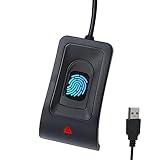
- Instant Windows Hello Integration: Seamlessly access your Windows 10/11 PC with Microsoft-certified biometric authentication. Replace cumbersome passwords with one-touch fingerprint login through the native Windows Hello framework—no third-party software required.
- Microsoft-Certified Security: Officially supports Windows Biometric Framework and Windows Hello. 0.001% False Acceptance Rate and 0.1% False Rejection Rate—bank-grade security for your desktop.
- Plug & Play – No Drivers Needed: Zero driver installation for genuine Windows systems—automatic recognition upon connection (95%+ compatibility). For custom Windows builds, a free driver update is available via the included quick-start guide.

The unit is a touch-and-hold sensor, so you place your fingertip flat on the pad instead of dragging it across. It supports up to 10 enrolled prints, ships with a five-foot braided extension cable, and sits at a friendly price point among biometric accessories in the fingerprint reader category.
Bottom Line
For a desktop tower parked under a desk or a shared workstation that several people log into, this reader delivers password-free access without a subscription or extra software.
Check current availability and add fingerprint login to your Windows PC here.
USB Fingerprint Reader for Windows: Overview
Model WA28 is a compact biometric dongle measuring roughly 2.6 by 1.5 by 1 inches, finished in black with an aluminum-alloy sensor housing. It connects over USB Type-A and reports a 5 Gbps interface, which is far more bandwidth than a fingerprint template ever needs, but it does signal a USB 3.0-class controller.
The manufacturer lists a false acceptance rate of 0.001% and a false rejection rate of 0.1%, along with sub-half-second recognition. Support is Windows-only, so Mac and Linux machines aren’t covered.
It currently ranks near the top of Amazon’s Biometrics subcategory and holds a mixed but generally favorable rating across several hundred buyer reviews. That tells you something about both its value and its inconsistency.
Windows Hello Sign-In Without Password Typing
Sign-in happens through the native Windows Hello framework, so the reader works at the lock screen, the Windows login screen, and inside apps that call Hello for verification. That includes browser passkey prompts, Microsoft Store purchases, and any Windows account elevation that offers a biometric option.
In practice, a clean touch wakes the desktop and drops you at the desktop in about a second. Damp or cold fingertips are the usual failure point, and you’ll fall back to the PIN.
Enrolling the same finger twice, once flat and once slightly rolled, cuts rejection noticeably. That trick makes more difference than anything else you can adjust.
Fingerprint Enrollment for Shared PCs
Ten enrollment slots make this practical for a family desktop or a front-desk machine where two or three people sign in during the day. Windows ties each print to a specific user account, so household members each enroll under their own profile.
A realistic split is three or four prints per person across two accounts. Index and thumb on each hand cover most reaching angles.
One caveat is worth planning around: if you rebuild the PC or reset the account, all templates are wiped and everyone has to re-enroll. Keep PINs written down somewhere safe before you migrate a shared Windows 11 machine.
Braided Extension Cable and Aluminum Sensor Housing
The five-foot braided extension cable is the most underrated part of the package. Desktop towers usually sit on the floor, and a sensor buried at ankle height is useless, so the extension lets you mount the reader on the desk surface or tape it to a monitor stand.
Build quality draws split opinions. The sensor face and surrounding shell feel solid, but some buyers describe the overall plastic construction as basic for the price.
If cable management is a concern on your setup, pairing it with retractable USB cables keeps the run tidy when the reader isn’t in use.
Windows 10 and 11 Setup Compatibility
Retail installations of Windows 10 and 11, both 32-bit and 64-bit, recognize the device on plug-in with no driver download. Head to Settings, Accounts, Sign-in options, then Fingerprint recognition, and Windows walks you through the enrollment taps.
Custom or heavily modified builds are the exception. Windows 11 for Workstation and some enterprise images require you to point Device Manager at the reader and pull the driver manually, a step the included quick-start guide covers.
Setting up biometrics on a test image? The process is identical if you install Windows 11 with VMware Workstation Pro on Windows 10, provided you pass the USB device through to the guest.
Pros and Cons
Pros
- Direct Windows Hello integration with no third-party software or account required
- Ten fingerprint slots suit multi-user desktops
- Five-foot braided extension cable solves under-desk tower placement
- Plug-and-play on standard Windows 10 and 11 installations
- Among the more affordable biometric options for a desktop
Cons
- Read reliability drops with dry, cold, or slightly moist fingers
- Plastic body feels basic despite the aluminum sensor ring
- No Mac or Linux support at all
- Custom Windows builds need a manual driver step
- Reports of units degrading after several months of daily use
What Customer Reviews Reveal
Buyer feedback splits sharply along reliability lines. Satisfied owners describe instant unlocks, painless first-time setup, and units still working a year on, with several noting that it does exactly what a laptop’s built-in sensor does at a fraction of the cost.
The critical side clusters around two complaints: fussy recognition that requires repositioning your finger, and outright failures where the reader stops registering touches. A handful of reviewers flag that some negative experiences surface only after weeks of use.
Setup difficulty gets mentioned occasionally, mostly by users on non-standard Windows configurations. Several buyers also point out that this is a press-and-hold pad, not a swipe strip, which catches people expecting the older style.
Conclusion
This reader earns its place on desktops that have no biometric hardware and a budget that doesn’t stretch to premium alternatives like the Verifi P2000 USB fingerprint reader. Setup on a stock Windows install takes under five minutes, and the extension cable makes it usable with a tower on the floor.
Go in with realistic expectations about touch consistency. Enroll four or five prints per account, keep your PIN as a backup, and register the same finger at two angles to reduce rejections.
If you need enterprise-grade durability or cross-platform support, look at higher-tier sensors in the reviews section before committing.
Frequently Asked Questions
Does this USB fingerprint reader work with Windows 11?
Yes, it supports both Windows 10 and Windows 11 in 32-bit and 64-bit versions. Standard retail installations detect it automatically; specialty editions such as Windows 11 for Workstation may require selecting the driver through Device Manager.
Does the reader need a separate driver to use Windows Hello?
Genuine Windows systems recognize the device without any driver installation. Custom or modified Windows builds are the exception, and the quick-start guide included in the box explains how to grab the free driver update for those cases.
How many fingerprints can be enrolled on this device?
The reader stores up to 10 fingerprint templates. Windows assigns each print to a specific user account, so a household with two accounts might enroll five fingers under each profile.
Is a USB fingerprint reader safe for Windows sign-in?
Biometric data enrolled through Windows Hello stays encrypted on the local machine and never leaves your PC. The manufacturer rates the sensor at a 0.001% false acceptance rate, and your PIN remains available as a fallback if a scan fails.
Does this fingerprint reader work with Mac or Linux?
No. The device supports Windows only, and the manufacturer explicitly states that macOS and Linux aren’t supported. Mac users with Apple silicon should rely on Touch ID hardware instead.
TechBytes

Our mission is to showcase the complex world of technology with comprehensive, accessible reviews. We bring you the freshest insights on everything from the most streamlined smartphones to the mightiest laptops, as well as the latest in smart home gadgets that simplify your daily routine and fitness wearables that monitor your well-being. Rest assured, we're here to guide you through the ever-evolving tech landscape.
