
Charging a large power station from the wall works fine until the wall isn’t an option. That’s where a folding 200-watt panel earns its keep, and the Jackery SolarSaga 200 is one of the more established choices for anyone running an Explorer-series unit off-grid.
This panel uses IBC monocrystalline cells rated at up to 24.3% conversion efficiency. It folds into a case with a built-in handle and carries an IP68 rating for wet weather. If you already own a Jackery power station and want meaningful daytime recharging instead of trickle top-ups, the 200W model is the size that makes solar practical rather than symbolic.
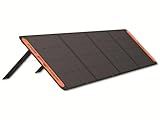
- Peak Performance: Featuring advanced monocrystalline solar cells coupled with our cutting-edge IBC technology, Jackery Portable Solar Panels achieve an impressive conversion efficiency of up to 24.3% while delivering higher power output even in low-light conditions, outperforming conventional PERC panels and significantly boosting power generation.
- Easy Setup: Elevate your solar journeys with more flexibility! Designed with ease in mind, our cutting-edge solar panels which can be bundled with all Jackery Portable Power Stations and Solar Generators, offers lightning-fast setup in just 10 seconds, and the ergonomic handle guarantees a comfortable grip for your convenience.
- Maximum Durability: Born for the great outdoors, our IP68-rated portable solar panels are rigorously tested to withstand even the harshest weather conditions. No worry about rainy days and storms. Furthermore, the ETFE-laminated case not only enhances durability but also ensures high performance over the long run.

It ships with a 9.8-foot DC charging cable, a carrying bag, and a user manual. It connects to compatible Explorer stations through the standard Jackery input, while RV owners and people using third-party charge controllers can use the MC4 connectors for custom setups.
Bottom Line
For campers, RV owners, and anyone building a home backup plan around a Jackery power station, the SolarSaga 200 delivers the output and build quality to justify its footprint.
Check current availability and pricing for the Jackery SolarSaga 200W here.
Jackery SolarSaga 200W Portable Solar Panel Overview
Built around monocrystalline silicon cells with IBC technology, this panel targets owners of mid-size and large Explorer units who need real recharge speed. It folds down to roughly 21.7 inches wide with a 55.2-inch open span, weighs enough to feel substantial without being awkward, and includes an ergonomic carry handle.
| Specification | Detail |
|---|---|
| Rated output | 200W |
| Maximum voltage | 23.2V |
| Amperage | 11.76A |
| Cell efficiency | Up to 24.3% |
| Connector | MC4 |
| Weather rating | IP68 |
| Upper temperature rating | 149°F |
Compatibility spans the Explorer 1000 v2, 2000 Pro, 2000 Plus, and 3000 Pro, among others. If you own a smaller unit, the Jackery SolarSaga 100W is the more proportionate match.
200W Output and 24.3% Conversion Efficiency
Peak output reaches 200 watts under ideal sun, with the IBC cell architecture generally performing better in overcast and early-morning light than older PERC designs. Real-world numbers, of course, sit lower, as they do with every portable panel.
Jackery cites 2.5 hours for a full charge when six of these panels feed a compatible station. That figure is useful mainly as a ceiling, since most owners run one to three panels.
Two panels in series will move an Explorer 1000 v2 through a meaningful chunk of its capacity in an afternoon, enough to run a 12V camping fridge overnight. Owners pairing multiple units report steady input across long deployments, and comparing it against a 100W-class panel like the Anker Solix PS100 makes the extra surface area difference pretty clear.
SolarTarget Angle Indicator and Fast Fold-Out Setup
Deployment takes about 10 seconds: unzip the case, unfold the panels, and prop up the integrated kickstands. The SolarTarget sunlight angle indicator sits on the frame and shows when the panel is aligned with the sun’s current position, taking some of the guesswork out of tilt adjustments.
That matters more than it might seem. Shading even a small section of one cell string can drop output disproportionately, so a quick alignment check every couple of hours helps keep input from sagging as the sun moves.
The 9.8-foot DC cable gives you enough slack to park the panel in full sun while the power station stays in shade. That arrangement also helps protect the battery from excess heat.
IP68 Weather Protection and ETFE Construction
An IP68 rating means the panel can handle rain and dust without shutting down a charging session, and owners in Florida and other storm-prone regions have kept theirs outdoors through wet conditions. The ETFE-laminated surface resists yellowing and abrasion better than standard PET coatings.
The upper temperature rating of 149°F covers rooftop and desert deployment. Owners nine months into regular outdoor use report that the panels are holding up without delamination or visible degradation.
The fabric case doubles as protection during transport, while the flat folded profile slides into RV storage bays and truck beds without taking up a full locker. Anyone comparing weatherproofing across models will find similar ratings on other portable solar panels, though ETFE quality varies considerably between brands.
Pros and Cons
Pros
- Strong output per panel, letting two units replace four 100W panels with less cable clutter
- IP68 and ETFE construction that survives rain, dust, and sustained heat
- SolarTarget angle indicator that removes trial-and-error from panel positioning
- MC4 connectors open compatibility with third-party charge controllers and RV systems
- Fast fold-out setup with integrated kickstands and a comfortable handle
Cons
- Large open footprint at 55.2 inches wide needs clear, unshaded ground
- Priced above generic 200W panels of similar rated output
- Heavier than 100W models, which matters for backpacking or solo carry
- Partial shading causes a sharp output drop, requiring careful placement
Customer Reviews and Delivery Considerations
Feedback from US buyers skews positive, with the panel holding a strong rating across a moderate review count. Owners running multiple units alongside Explorer 500, 1000, 1500, and 2000 Pro stations describe consistent charging performance and appreciate the compact fold-down size for RV and trailer storage.
One recurring practical note from experienced owners is to keep the entire panel clear of shadows. Partial shading cuts output far more than the shaded area would suggest.
A notable warning comes from European listings, where several buyers received a Dell 240W AC adapter instead of the panel. If you order, verify the seller and inspect the package on arrival before assuming a fulfillment error is a product defect.
Conclusion
The SolarSaga 200 makes sense if you own a mid-size or large Jackery station and want to recharge it in a single sunny day. Two panels paired with an Explorer 1000 v2 cover most camping loads, while three or more suit the 2000 Plus and 3000 Pro.
Weigh the open footprint against your typical campsite. If you park in tree cover or move frequently, smaller panels give you more placement flexibility.
Buyers building a broader off-grid kit should also look at how the panel pairs with a solar generator for camping setup before committing to panel count.
Frequently Asked Questions
Is the Jackery SolarSaga 200W compatible with the Explorer 300?
The 200W panel exceeds the input limit of the Explorer 300, so pairing them wastes most of the panel’s capacity. Jackery lists compatibility with larger units including the Explorer 1000 v2, 1500 Pro, 2000 Pro, 2000 Plus, and 3000 Pro.
How much power does the Jackery SolarSaga 200W produce in real conditions?
Expect noticeably less than the 200W rating in typical outdoor use, since panel temperature, sun angle, cloud cover, and cable losses all reduce output. Clean glass, direct midday sun, and correct tilt using the SolarTarget indicator get you closest to the rated figure.
Is the Jackery SolarSaga 200W waterproof?
The panel carries an IP68 rating, so rain and dust exposure won’t damage it. The DC output connector and any adapters should stay dry and off wet ground, since the rating applies to the panel body.
How long does it take to charge a Jackery power station with the SolarSaga 200W?
Six panels bring a compatible station to full in about 2.5 hours under strong sun. With two panels, plan on a full daylight session for a 1000Wh-class unit, depending on cloud cover and season.
Can the Jackery SolarSaga 200W be used for RV camping?
Owners regularly use it with RVs and small trailers, either through Jackery stations or MC4 connections into onboard lithium battery charge controllers. Its flat, folded profile fits standard RV storage compartments and truck beds.
TechBytes

Our mission is to showcase the complex world of technology with comprehensive, accessible reviews. We bring you the freshest insights on everything from the most streamlined smartphones to the mightiest laptops, as well as the latest in smart home gadgets that simplify your daily routine and fitness wearables that monitor your well-being. Rest assured, we're here to guide you through the ever-evolving tech landscape.
