
If you have been shopping for your first serious microphone, the Samson Q2U keeps showing up on shortlists for a reason. It is a handheld dynamic mic that connects over USB-C for immediate computer recording and over XLR when you move into a mixer or interface setup.
This Samson Q2U Microphone Pack Review looks at what that dual-output design gets you in daily use, from voiceovers and podcast episodes to livestreams recorded in ordinary, untreated rooms.
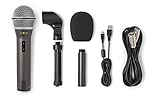
- Dynamic handheld microphone with XLR and USB-C
- Plugs directly into any computer with a USB-C interface
- Includes Tripod Desktop Stand, Tripod Extension, Mic Clip, Windscreen, USB-C Cable and XLR Cable

The Q2U ships as a complete kit with a desktop tripod, mic clip, windscreen, and both cables, so you can record within minutes of unboxing without adding a single accessory. Its metal body, unidirectional pickup, and 50Hz to 15kHz frequency range suit spoken word far more than a condenser would in a noisy space.
Samson backs the mic with a two-year warranty, and it currently sits near the top of Amazon’s multipurpose dynamic microphone category.
Bottom Line
If you want one microphone that works today over USB and still fits an upgraded studio chain later, the Q2U covers both paths at a beginner-friendly price.
Check current availability and pricing for the Samson Q2U here.
Samson Q2U USB/XLR Dynamic Microphone Recording and Podcasting Pack Overview
Two outputs on one handheld body define this package. The mic runs a cardioid (unidirectional) dynamic capsule in a black metal enclosure, weighing 11.2 ounces and measuring about 10 inches long in its packaged dimensions.
| Specification | Detail |
|---|---|
| Model | SAQ2U (Q2U) |
| Type | Dynamic, unidirectional |
| Frequency range | 50Hz to 15kHz |
| Signal-to-noise ratio | 70 dB |
| Max SPL | 148 dB |
| Connections | USB-C and XLR |
| Body material | Metal |
| Weight | 11.2 oz |
| Warranty | 2 years |
The USB-C connection replaces the older micro-USB port found on earlier versions, which matters if your laptop only carries USB-C ports. Channel count is one, so it records a single mono voice track.
Dynamic Voice Capture in Real Rooms
Room noise is where the dynamic capsule earns its keep. A cardioid dynamic rejects sound arriving from the sides and rear, so keyboard clatter, an air conditioner, or an untreated wall behind you lands far quieter in the recording than it would through a condenser.
The 50Hz to 15kHz range is tuned for speech. You get body in the low mids and clear consonants up top without the airy hiss that can exaggerate sibilance.
Reviewers with broadcast backgrounds note that proximity matters here: work within a few inches of the grille and speak across it slightly. Back off eight inches and the voice thins out, which is the usual adjustment new users make.
With 148 dB max SPL, loud delivery and close mic technique won’t overload the capsule.
USB-C Plug-and-Play Recording
Plugging into a computer takes one cable and no drivers. The Q2U appears as a standard audio device on Windows and macOS, drawing bus power from the port, so no external supply or powered hub is required for normal use.
A headphone jack on the mic body gives zero-latency monitoring, letting you hear yourself without the echo delay that software monitoring introduces. Gain and headphone level are set on the mic itself.
Users on Mac Mini and laptop setups report that the connection is recognized immediately in recording software and conferencing apps. Softer speakers usually need to raise input gain in the operating system’s sound settings, which is a normal step for dynamic mics.
XLR Connectivity for Future Upgrades
The analog XLR output is what separates this from most USB-only mics. Route it into a mixer, field recorder, or audio interface, and the same capsule feeds a professional signal chain with no adapters.
That path becomes useful once you add a second host, need multitrack recording, or want a cleaner preamp. Podcasters who start solo over USB and later move to a two-mic setup can keep the Q2U rather than replacing it.
Both outputs can run at once, which some users rely on for a backup recording. If you’re weighing dual-output mics generally, our Rode PodMic USB dynamic broadcast microphone review covers a heavier broadcast-style alternative in the same category.
What’s Included in the Recording Pack
Everything needed for a first session comes in the box:
- Q2U dynamic microphone with USB-C and XLR outputs
- Tripod desktop stand
- Tripod extension for added height
- Mic clip
- Foam windscreen
- USB-C cable
- XLR cable
The tripod plus extension puts the capsule at roughly speaking height on a desk. Its footprint is compact, though a few users find the small base does transmit desk bumps, which a boom arm or shock mount solves later.
The included foam windscreen tames plosives at close range. A dedicated pop filter helps if you work very close to the grille.
Setup and Everyday Usability
First-time assembly takes a few minutes: screw the extension into the tripod, seat the mic clip, and connect one cable. Selecting the Q2U as the input device in your recording app or operating system finishes the job.
The metal chassis feels solid rather than hollow, and the handheld form makes it easy to grab for interviews or field use. It fits standard mic clips and boom arms with a 5/8-inch thread.
Two habits improve results quickly: keep your mouth close to the grille, and speak slightly off-axis to reduce plosives. Some users report needing more gain than expected at first, so check input levels before recording a full session.
Who Should Buy the Samson Q2U?
Beginners who want a clear upgrade path get the most value here. Podcasters, streamers, remote workers, and voiceover hobbyists recording in a bedroom or home office are the core audience.
It suits anyone recording in a room with background noise, where a condenser would capture too much of the environment. Our roundup of the best microphone for podcasting puts the Q2U in context against pricier options.
If you want multiple polar patterns for group recording around one mic, the Logitech Blue Yeti USB microphone review covers that use case. Broadcasters wanting onboard DSP and processing should look at the Shure MV7 podcast dynamic microphone review instead.
Pros and Cons
Pros
- USB-C and XLR outputs on one microphone, usable simultaneously
- Dynamic cardioid capsule rejects room noise and keyboard sound effectively
- Headphone jack with latency-free monitoring built into the body
- Complete kit including stand, extension, clip, windscreen, and both cables
- Metal construction with a two-year warranty
- No drivers, no external power, no interface needed to start
Cons
- Small tripod base picks up desk vibration and limits positioning
- Needs close mic technique; sound thins noticeably at a distance
- Requires more input gain than condensers, especially for soft speakers
- 15kHz top end lacks the air a condenser gives to music sources
- Foam windscreen alone will not stop hard plosives at very close range
What Customers Say
Feedback skews strongly positive, with the mic well rated across thousands of buyers. A common theme is the jump in quality over headset and built-in laptop microphones, with users describing cleaner speech and far fewer breath and pop artifacts.
Several reviewers who own more expensive USB condensers say the Q2U delivers comparable or better spoken-word results in untreated rooms. A radio engineer using high-end Schoeps mics and a Sound Devices recorder still rated its performance highly for the price bracket.
Buyers writing in Spanish, Polish, and German praise the build quality and straightforward setup. Recurring criticisms involve the small desktop stand and the need to speak close and adjust gain, along with occasional hardware quirks reported by a minority of owners.
Conclusion
The Q2U remains one of the safest first microphone purchases available because it works well over USB now and still belongs in an XLR chain later. Voice recordings in ordinary rooms come out clean, thanks to a dynamic capsule that ignores most of what happens around it.
Plan on adding a boom arm or shock mount once you settle into a permanent desk setup, and budget for a pop filter if you record with your lips near the grille. If you prefer a condenser’s brighter, more detailed sound and have a quiet space, the Audio-Technica AT2020USB-X review covers that alternative.
View the Samson Q2U recording pack on Amazon.
Frequently Asked Questions
Is the Samson Q2U a good microphone for podcasting?
Yes, it is one of the most widely recommended entry-level podcast microphones. The cardioid dynamic capsule suppresses room reflections and background noise, and the included stand, windscreen, and cables let you record a first episode without buying anything else.
Can the Samson Q2U connect directly to a computer?
Yes, the USB-C output plugs straight into a Windows PC or Mac with no drivers or interface. The computer supplies bus power, and the mic shows up as a standard audio input device in recording and conferencing software.
Is the Samson Q2U good for singing?
It handles vocals capably for demos, scratch tracks, and home recordings, with 148 dB max SPL that tolerates loud singing. The 50Hz to 15kHz range favors midrange clarity, so a condenser will capture more high-end air for polished vocal production.
Does the Samson Q2U need phantom power?
No, it is a dynamic microphone and requires no phantom power on either connection. Over USB-C it draws power from the computer, and over XLR it works with a standard preamp input with phantom power switched off.
Can I use the Samson Q2U with an XLR audio interface?
Yes, the balanced XLR output connects to any audio interface, mixer, or field recorder using the included cable. Set the preamp gain fairly high, since dynamic mics produce a lower signal than condensers, and quiet speakers may need a little extra headroom.
TechBytes

Our mission is to showcase the complex world of technology with comprehensive, accessible reviews. We bring you the freshest insights on everything from the most streamlined smartphones to the mightiest laptops, as well as the latest in smart home gadgets that simplify your daily routine and fitness wearables that monitor your well-being. Rest assured, we're here to guide you through the ever-evolving tech landscape.
